
Sourcing & Trade Guide
Sourcing Beauty & Personal Care Products from African Manufacturers
Comilmart Team
September 9, 2026
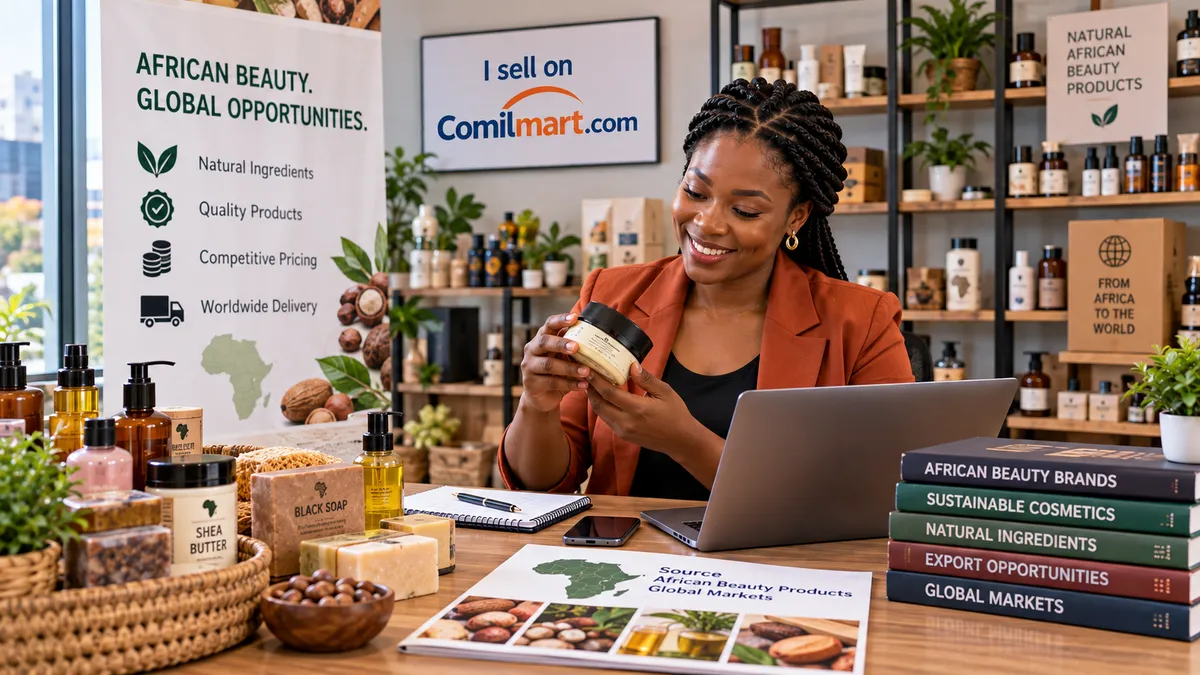
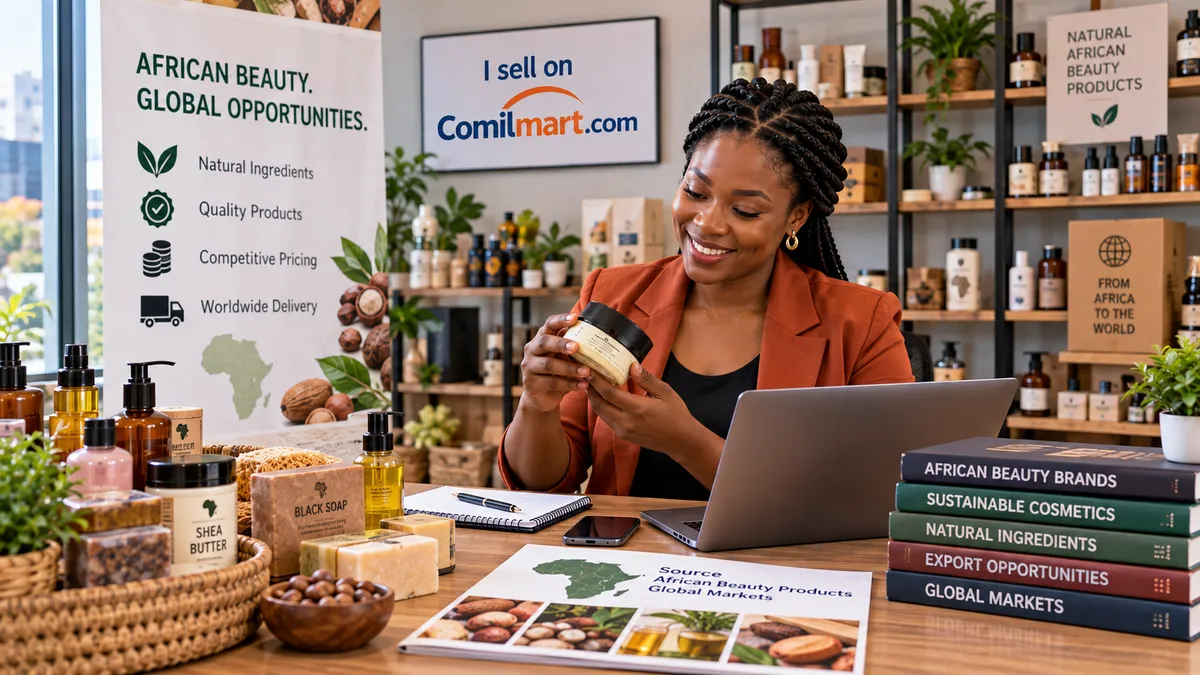
African beauty and personal care manufacturing has moved well beyond raw ingredient export into genuinely sophisticated finished product manufacturing — soaps, lotions, hair care, and skincare lines built around ingredients like shea butter, black soap, baobab oil, and moringa that carry real international demand, driven partly by growing global interest in natural and traditionally-sourced beauty ingredients.
Key ingredient categories
Shea butter
Already covered from a raw ingredient perspective in our agro products guide, shea butter is also the base ingredient for a huge range of finished beauty products — body butters, lotions, soaps, and hair treatments. Buyers sourcing finished shea-based products should ask about the shea butter's own sourcing (raw vs. refined, which affects both scent and how the product is marketed) in addition to evaluating the finished formulation itself.
African black soap
Traditionally made from plantain skins, cocoa pod husks, palm oil, and shea butter, black soap has become a genuinely popular skincare category internationally, valued for its natural formulation and effectiveness for certain skin types. Quality varies considerably between manufacturers, making sample testing and supplier verification particularly important in this category.
Baobab and moringa oil
Both baobab and moringa oils have found growing use in premium skincare formulations internationally, valued for their nutrient profiles. As newer entrants to global beauty markets compared to shea, sourcing genuinely high-quality, properly processed product from a verified supplier matters even more, since the market has less established quality benchmarks that buyers can reference.
Natural hair care
A growing category of African manufacturers produce hair care lines specifically formulated for textured and curly hair, often building on traditional ingredients and formulations with growing international demand, particularly in markets with significant African diaspora populations.
What to verify before sourcing in bulk
Cosmetic regulatory compliance
Unlike raw agricultural ingredients, finished cosmetic and personal care products are subject to specific regulatory requirements in most destination markets — ingredient labeling, safety substantiation, and in some cases pre-market notification requirements. Ask suppliers directly about their experience exporting to your specific destination market and whether their formulations and labeling already account for its requirements, since retrofitting a product for a new market's regulations after the fact can be costly and slow.
Formulation consistency
Ask about a supplier's quality control process for ensuring batch-to-batch consistency — a genuinely important consideration for beauty products, where customers notice and react to changes in scent, texture, or performance between batches even when the ingredient list stays technically the same.
Private label and custom formulation capability
Many African beauty manufacturers offer private label services — producing under your own brand rather than theirs — which is often the more attractive option for buyers building their own beauty brand rather than reselling an existing product line. Ask specifically about minimum order quantities for private label work, which are often higher than ordering from a supplier's existing catalog, and about typical timelines for developing a custom formulation if you have specific requirements.
Shelf life and stability testing
Natural, minimally-preserved formulations — often a selling point for African beauty products — can also mean shorter shelf life than heavily-preserved mass-market alternatives. Ask directly about a product's tested shelf life and recommended storage conditions, and factor this into your own inventory planning so stock doesn't sit unsold past its useful life.
Pricing and positioning considerations
African beauty products, particularly those built around traditional ingredients and formulations, often support premium positioning in international markets that value authenticity and natural sourcing — but this only works if the supply chain genuinely supports the story being told. Buyers who can speak specifically and accurately about ingredient sourcing, traditional production methods, and the communities involved in production have a genuinely stronger marketing position than those making generic natural-beauty claims without real substance behind them.
Where to find verified beauty and personal care suppliers
Ghana and Nigeria remain strong sourcing markets for shea-based products specifically, though manufacturers producing finished beauty goods exist across the continent. On Comilmart, beauty and personal care manufacturers go through the same verification process as every other category before earning a Verified badge.
See our guides to sourcing from Ghana and sourcing from Nigeria for country-specific verification guidance relevant to this category, and our agro products guide for more on raw shea butter and other cosmetic ingredient sourcing specifically.
Ingredient traceability and why it matters more here
Beauty and personal care buyers increasingly face questions from their own customers about exactly where ingredients come from and how ethically they're sourced — not just the finished product's country of origin, but the specific supply chain behind key ingredients like shea butter or baobab oil. Suppliers who can speak specifically to their ingredient sourcing, including relationships with the cooperatives or communities that produce raw materials like shea, offer buyers a genuinely stronger and more defensible story to tell their own customers than a supplier who can only describe their sourcing in vague, generic terms.
Packaging considerations for international shipping
Beauty and personal care products present specific packaging challenges beyond what applies to most other categories — liquid and semi-liquid products (lotions, oils) need leak-proof packaging that survives temperature fluctuations during transit, and glass packaging, while often preferred for premium positioning, carries genuine breakage risk during long-distance shipping that plastic alternatives don't. Ask suppliers directly about their packaging choices and, where relevant, whether they can accommodate specific packaging requests if your target market or brand positioning calls for something different from their default option.
Scaling from a trial order to ongoing supply
Given that formulation consistency and regulatory compliance both matter significantly in this category, a staged approach to scaling up an order is particularly worthwhile here. Start with a genuinely small trial order to test both product quality and your own market's reception, then place a moderate second order once you've validated demand, before committing to the kind of volume that unlocks better per-unit pricing. This is a category where moving too fast to large volume before validating quality consistency and market fit carries real risk — a customer complaint about an inconsistent batch is far more damaging in beauty products, where customers interact with the product daily and notice changes immediately, than in many other wholesale categories.
Frequently asked questions
Can I request a custom scent or formulation adjustment to an existing product? Many manufacturers will accommodate this, though it typically increases MOQ and lead time compared to ordering their standard formulation — ask specifically what's possible before assuming either way.
How do I evaluate quality before committing to a bulk order? Beyond requesting samples, ask about the supplier's own quality control process — batch testing, shelf-life testing, and consistency checks — since a supplier who can describe this specifically is a stronger bet than one who simply asserts their product is high quality without explaining how they verify that themselves.
Is private labeling significantly more expensive than buying an existing branded product? Not necessarily for the product itself, though private label often carries a higher MOQ and sometimes a setup fee for custom packaging — but it gives you full control over branding and positioning, which is usually the point of choosing this route in the first place.
Building a genuine brand story around sourcing
One advantage buyers in this category have over many other wholesale categories is a genuinely compelling sourcing story to tell, if the supply chain actually supports it. Shea butter's connection to women's cooperatives across West Africa, for instance, is a real and well-documented aspect of the industry in many cases — not a marketing invention — and buyers who take the time to understand and accurately represent their specific supplier's actual practices, rather than making generic claims, build a stronger and more defensible brand position. This does require doing the work of actually understanding your supplier's operation rather than assuming a compelling story exists without verifying it, but for buyers willing to do that work, it's a genuine differentiator in an increasingly crowded natural beauty market.
Testing products in your target market before a large commitment
Beauty products, more than many wholesale categories, are genuinely sensitive to local preferences — scent profiles, texture expectations, and even packaging aesthetics that work well in one market don't always translate directly to another. Before committing to a large order, consider a limited market test with a smaller batch, gathering real customer feedback on formulation and packaging before scaling up. This is a case where the cost of a smaller, slightly less efficient initial order is genuinely worth paying to avoid a much larger and more expensive mismatch between what a supplier produces and what your specific market actually wants.
Understanding the difference between raw materials and finished formulations
It's worth being explicit about a distinction that trips up some first-time buyers in this category: sourcing raw shea butter or baobab oil as an ingredient for your own product development is a fundamentally different relationship than sourcing an already-formulated finished product, like a complete body lotion or soap bar, ready for retail. The former requires you to have your own formulation and manufacturing capability, or a separate contract manufacturer to work with; the latter is more turnkey but gives you less control over the exact formulation. Being clear with a supplier about which relationship you actually want — raw ingredient supply, finished private-label product, or their own existing branded line — avoids a significant amount of wasted back-and-forth in early conversations, since these are genuinely different production and quotation processes even when discussing what looks like the same underlying ingredient.
Working with manufacturers who export vs. those who don't yet
Some excellent African beauty manufacturers have built strong domestic or regional businesses but have limited or no experience with international export logistics, documentation, and destination-market compliance. This doesn't necessarily mean their product isn't worth sourcing — sometimes the opposite is true, since a manufacturer focused purely on domestic quality hasn't had to compromise formulation for export shelf-stability requirements — but it does mean you should expect a steeper learning curve together on the logistics and compliance side. A manufacturer with established export experience will generally move faster and with fewer surprises through the first few orders, while a domestically-focused manufacturer with excellent product may require more patience and guidance from you as the buyer to navigate international shipping and documentation requirements for the first time.
Neither path is automatically wrong — an experienced exporter reduces friction, while a domestically-strong manufacturer newer to export may offer product quality and pricing that makes the extra patience worthwhile. Being clear-eyed about which situation you're in helps set realistic timelines rather than assuming every relationship will move at the same pace.
Getting started
Create a free buyer account on Comilmart to browse Verified beauty and personal care manufacturers. See our complete guide to sourcing wholesale from Africa for broader guidance that applies across every category.