
Sourcing & Trade Guide
The Complete Guide to Sourcing Wholesale Products from Africa in 2026
Comilmart Team
September 9, 2026
If you've ever typed "wholesale suppliers Africa" into Google, you already know the problem: the results are a mess of outdated directories, unverified listings, and articles that talk *about* sourcing from Africa without actually connecting you to anyone. Meanwhile, the opportunity is real — Africa is home to manufacturers producing everything from textiles and leather goods to processed foods, cosmetics, and building materials, often at prices and quality levels that rival anywhere else in the world.
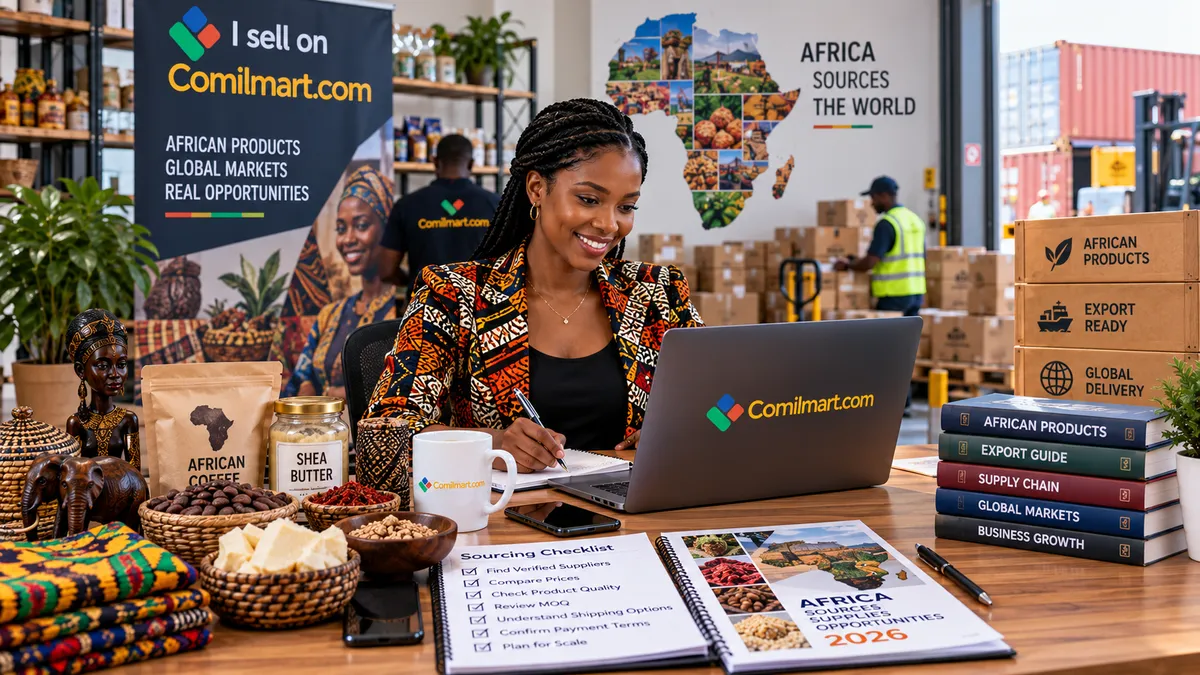
This guide walks through exactly how to source wholesale products from Africa properly — from finding suppliers you can actually trust, to understanding MOQs and payment terms, to getting your goods shipped without surprises.
Why source from Africa specifically?
Three reasons keep coming up among buyers who've made the switch:
- Diversification away from single-region dependency. Many importers who built their supply chain entirely around one manufacturing hub have spent the last few years learning what happens when that hub faces disruption. African manufacturing offers a genuine alternative, not just a backup.
- Raw material proximity. For categories like cotton textiles, leather, cocoa-based products, shea and cosmetic ingredients, and agricultural goods, African suppliers are often working with the raw material right where it's grown or produced — cutting out several layers of middlemen.
- The African Continental Free Trade Area (AfCFTA). With 54 member states now part of the agreement, cross-border trade within Africa is becoming significantly easier, which is starting to translate into more competitive pricing and larger-scale production for export too.
The trust problem — and how to actually solve it
Here's the honest challenge: the biggest reason buyers hesitate to source from Africa isn't price or quality, it's verification. Unlike sourcing from a handful of well-mapped manufacturing hubs, African supplier information is fragmented across hundreds of small directories, many of which haven't been updated in years, and few of which do any real verification of the businesses they list.
When evaluating any supplier, whether through a marketplace or a direct referral, look for:
- A verifiable business registration in their country of operation
- Real product photos and, ideally, factory or workshop photos or video — not just stock images
- A track record you can check — reviews, past export experience, or a marketplace history
- Willingness to provide samples before a bulk order
This is exactly the gap a platform like Comilmart is built to close — every manufacturer on the platform goes through a verification process before earning a Verified badge, so you're not starting from zero on trust with every new supplier.
Understanding MOQ (Minimum Order Quantity)
Nearly every wholesale supplier sets a minimum order quantity — the smallest amount they're willing to produce or ship per order. MOQs exist because production runs, especially for anything custom (private label packaging, specific colorways, made-to-spec sizing) have fixed setup costs that only make sense at a certain volume.
A few practical tips:
- MOQs are often more negotiable than they first appear, especially for a supplier's standard (non-custom) catalog items.
- If a supplier's MOQ is too high for your first order, ask about a smaller trial order at a slightly higher unit price — many suppliers will accommodate this to build the relationship.
- Compare MOQs across a few suppliers in the same category before committing; they vary more than buyers expect.
Payment terms and protecting your money
The standard structure for a new wholesale relationship is a deposit (often 30-50%) up front, with the balance due before or upon shipment. Established relationships sometimes move to more favorable terms like net-30, where payment is due 30 days after delivery — but this is earned over time, not something to expect on a first order.
Whatever the terms, never wire money directly to a supplier you haven't verified through some independent channel. Working through a marketplace with built-in payment protection — where funds are held until you confirm the order arrived as described — removes most of the risk that has historically made cross-border wholesale sourcing intimidating for first-timers.
Shipping and lead times
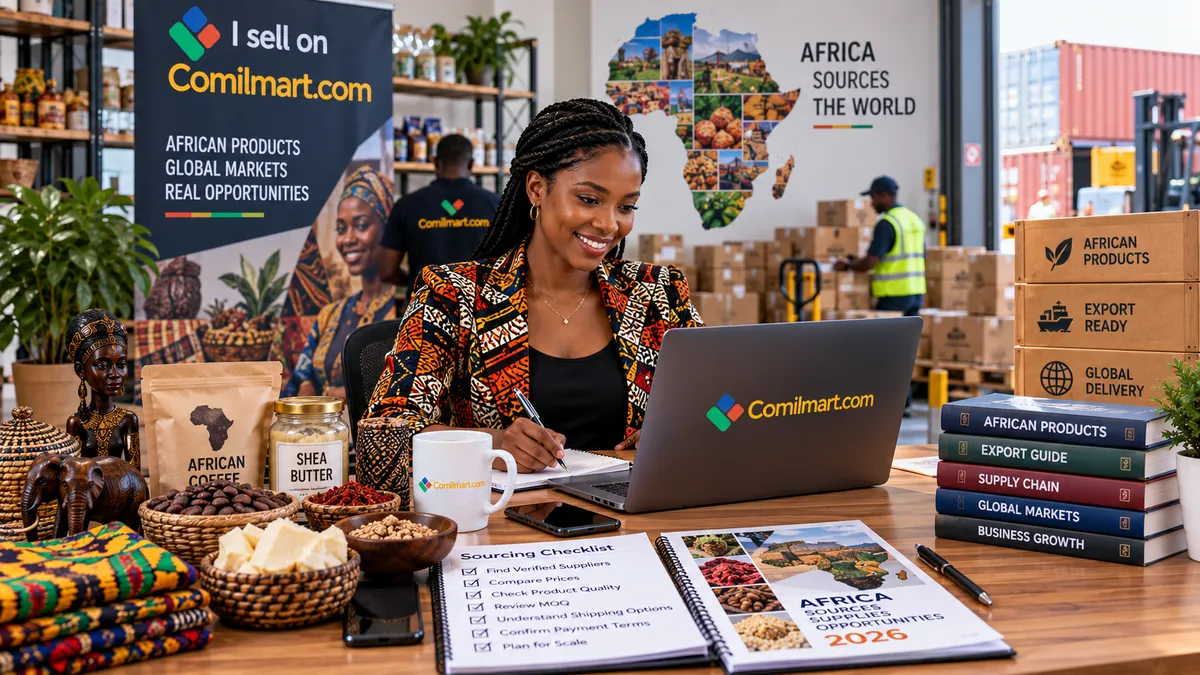
Lead times from African manufacturers vary widely by category and by how far the port of origin is from major shipping lanes. As a rough guide, budget 2-4 weeks for production (longer for a first custom order) plus ocean freight transit time, which can range from a couple of weeks to over a month depending on the destination. Whoever is responsible for freight, insurance, and customs at each stage should be spelled out clearly in your purchase agreement — the ICC's Incoterms rules are the internationally recognized standard for defining this, and worth understanding before your first shipment. Air freight is faster but meaningfully more expensive — usually only worth it for smaller, higher-value orders or when a deadline genuinely can't move.
Ask any supplier for their typical lead time on your specific product and order size before you commit — and build in a buffer for your own planning, since first orders with a new supplier almost always run a little longer than quoted.
Getting started
The fastest way to move from "researching" to "actually sourcing" is to pick one category, identify three to five verified suppliers, and request samples or quotes from each before comparing. Create a free buyer account on Comilmart to browse verified manufacturers by category, or read our companion guides on sourcing textiles and agro products for category-specific detail.