

Sourcing & Trade Guide
A Beginner's Guide to Product Sourcing for Your First Online Store
Comilmart Team
August 22, 2026
Starting an online store is genuinely exciting, but for a first-time seller, figuring out where products actually come from — sourcing — can feel like the most intimidating part of the whole process. This guide walks through the fundamentals in a genuinely practical, beginner-friendly way, covering the decisions and steps that actually matter for someone starting from scratch.
Start with a genuinely specific product idea, not a broad category
"I want to sell clothing" or "I want to sell electronics" is too broad to actually start sourcing effectively — successful first-time sellers generally narrow down to something specific enough to actually research and evaluate suppliers for. Rather than "clothing," something like "affordable, comfortable yoga wear for beginners" gives you an actual, specific product category to source, evaluate suppliers within, and market around. This specificity isn't limiting — it's what makes the sourcing and marketing process actually manageable for a first-time seller.
Understand the basic sourcing models available to you
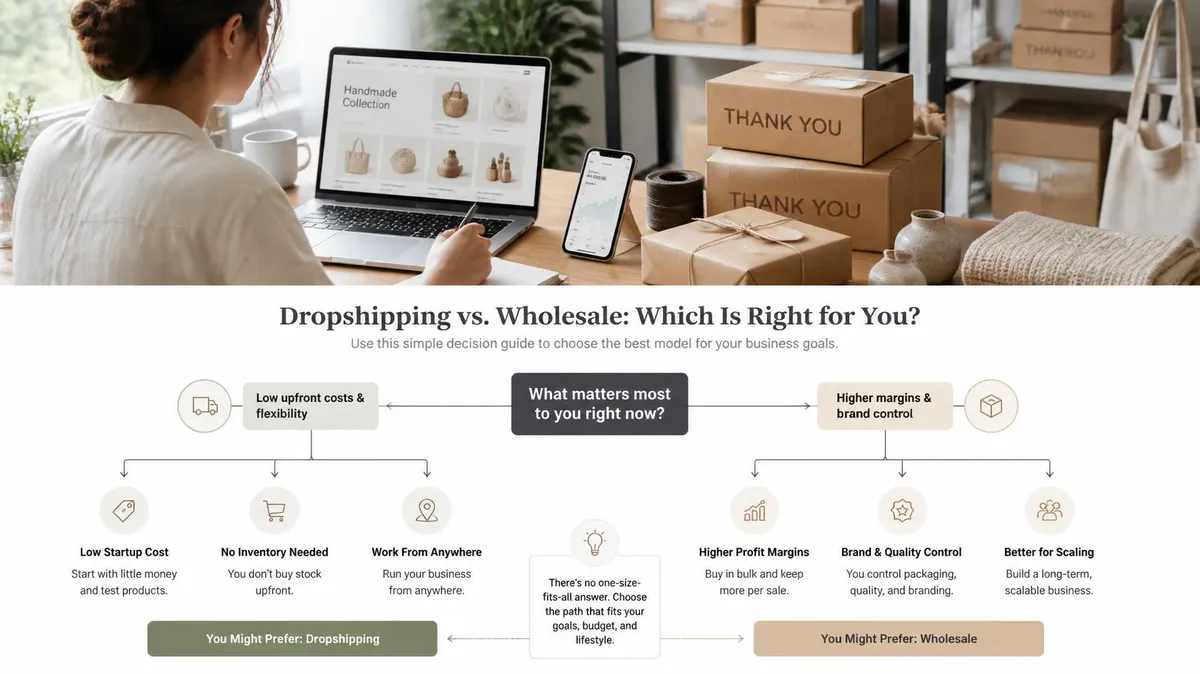
As a beginner, you generally have a few core options worth understanding before diving in: wholesale buying (purchasing bulk inventory upfront from a manufacturer, which you then store and ship yourself), dropshipping (listing products without holding inventory, with your supplier shipping directly to customers as orders come in), and private or white labeling (branding an existing or custom product as your own). Each involves genuinely different capital requirements, margins, and control — worth understanding the real tradeoffs of each before committing to one approach for your first venture.
Decide on your starting capital reality honestly
Being genuinely honest with yourself about how much capital you can afford to invest upfront, and are comfortable potentially losing if a product doesn't sell as hoped, should meaningfully shape your sourcing approach. If you have limited starting capital, dropshipping or a smaller initial wholesale order minimizes your financial risk while you're still learning and validating demand. If you have more capital available and genuine confidence in demand for a specific product, a larger wholesale order can offer better margins from the start, though with correspondingly more financial risk if the product doesn't sell as expected.
Finding and evaluating potential suppliers
You can start by creating a free buyer account on Comilmart and browsing verified suppliers directly — every listed supplier has already gone through a documentation check, and Comilmart's buyer protection covers your first order.
For a first-time seller, using a verified marketplace platform genuinely simplifies supplier discovery and evaluation considerably compared to trying to find and vet suppliers entirely independently — verification badges, review history, and structured communication tools all reduce the diligence burden compared to sourcing completely on your own. When evaluating specific suppliers, the fundamentals covered throughout supplier vetting generally — checking for genuine verification, requesting real production photos, reading actual review content, and testing communication responsiveness — apply just as much to a first-time seller as to any other buyer.
Always start with a sample, without exception
For a first-time seller specifically, ordering a sample before committing to any real inventory purchase is genuinely close to non-negotiable. This isn't just about verifying the supplier is legitimate — it's about confirming the actual product genuinely meets your own quality expectations and matches what you're planning to market, before you've committed real capital to inventory you can't yet confirm will meet your standards. Many first-time sellers skip this step out of eagerness to launch, and it's a genuinely common source of early, avoidable problems.
Understanding minimum order quantities as a beginner
MOQ can feel like a genuine barrier for a first-time seller without established capital or confirmed demand. It's worth knowing that many suppliers have more flexibility than their published MOQ suggests, particularly for a buyer who communicates clearly and specifically about being a new business testing initial demand — being upfront about this, rather than pretending to be a larger, more established buyer than you actually are, often gets a more genuinely helpful response than you might expect.
Calculating your real margins before committing
Before committing to any sourcing decision, working through your actual expected margin — product cost, shipping to you (if applicable), your selling price, payment processing fees, and your own marketing and operational costs — gives you a genuinely realistic picture of whether a specific product and sourcing approach can actually be profitable at the volume you're realistically able to achieve as a new seller. It's a common and costly mistake to focus purely on the sourcing side without working through this full margin picture first.
Building in quality control from the start
Even as a beginner, building a simple habit of checking product quality — whether that's your own sample review before launch, or periodic spot-checks of inventory as you scale — protects your growing reputation as a new seller, when a bad review or quality complaint can have an outsized impact before you've built a real track record to absorb it.
Common beginner mistakes worth avoiding
A few patterns show up repeatedly among first-time sellers, worth being aware of specifically. Committing to a large inventory order before genuinely validating demand, based on personal excitement about a product rather than real market evidence, is a common and costly mistake. Skipping the sample-ordering step to save time, only to discover a quality issue after committing to full inventory, is another frequent, avoidable problem. And underestimating total costs — forgetting shipping, duties, payment processing fees, and marketing costs when calculating expected margin — leads many first-time sellers to discover their apparently profitable product isn't actually profitable once the full cost picture is accounted for.
A practical first-time seller checklist
- Narrow your product idea to something genuinely specific, not a broad category
- Honestly assess your available starting capital and risk tolerance
- Choose a sourcing model (wholesale, dropshipping, or private/white label) that fits that capital reality
- Evaluate potential suppliers using genuine diligence — verification, reviews, communication testing
- Order a sample before committing to any real inventory purchase, without exception
- Calculate your genuine expected margin, including all real costs, before finalizing your sourcing decision
- Start with a smaller initial order than you might be tempted to, validating real demand before scaling up
Frequently asked questions
How much starting capital do I genuinely need to begin sourcing for a first online store?
This varies enormously based on your chosen sourcing model and product category — dropshipping can genuinely start with very minimal upfront capital, while a wholesale approach requires more, though a smaller initial order rather than a large one keeps this more accessible for a first-time seller testing demand.
Is it realistic to start sourcing internationally as a complete beginner?
Yes, particularly through a verified marketplace platform that simplifies supplier discovery and provides buyer protection — the same diligence fundamentals that apply to any sourcing decision apply here, and a beginner who follows them carefully can genuinely source internationally with confidence, even on a first venture.
Should I try to negotiate as a first-time buyer, even without an established track record?
It's still reasonable to ask specific, reasonable questions about flexibility on MOQ or terms, being honest about being a new seller — many suppliers are willing to work with a genuine, communicative new buyer even without an established track record, particularly if you're specific and realistic in what you're asking for.
The bottom line
Product sourcing for a first online store is genuinely learnable, not something that requires prior expertise to approach successfully. Starting with a specific product idea, being honest about your capital and risk tolerance, applying real diligence to supplier selection, and always testing with a sample before committing to real inventory gives a first-time seller a genuinely solid foundation to build from — turning what can feel like an intimidating unknown into a manageable, step-by-step process.