
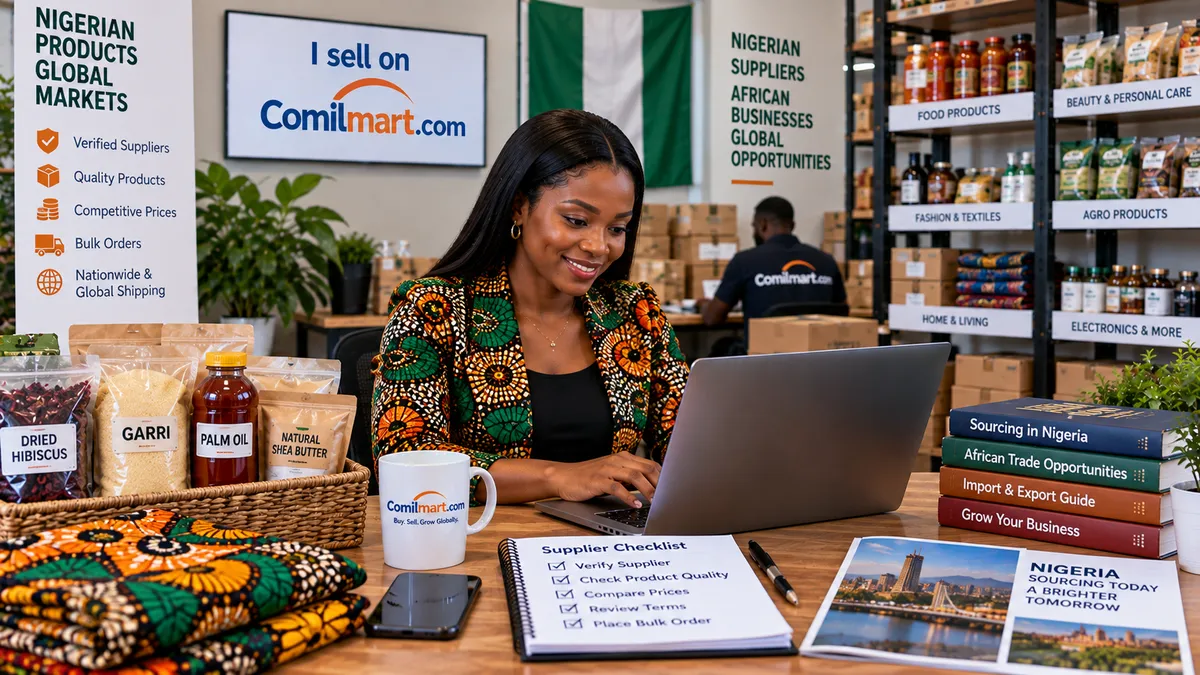
Sourcing & Trade Guide
How to Find Verified Wholesale Suppliers in Nigeria
Comilmart Team
September 9, 2026
Nigeria is Africa's largest economy and one of its most active manufacturing bases, with strong production in textiles, food processing, cosmetics and personal care, plastics, and building materials. It's also, unfortunately, one of the countries where sourcing horror stories get told the most — usually because a buyer worked with an unverified contact found through a random web search or social media DM.
None of that means Nigeria is a risky place to source from. It means verification matters more here than almost anywhere else, and buyers who do it properly consistently report excellent outcomes.
Where to actually look
1. Verified marketplaces first
Start with a platform that does real verification work before you ever see a listing. On Comilmart, Nigerian manufacturers go through a documented verification process — business registration, product and facility evidence — before earning a Verified badge. This alone eliminates the majority of the risk that gives Nigerian sourcing its reputation.
2. Nigerian trade and export associations
Bodies like the Nigerian Export Promotion Council maintain registries of export-ready manufacturers, and industry-specific associations (for textiles, agro-processing, and others) can be a useful secondary check on a supplier's legitimacy.
3. Trade shows and exhibitions
Where budget and timing allow, Nigerian trade fairs and exhibitions remain one of the most reliable ways to meet manufacturers directly, see products in person, and build the kind of relationship that makes a long-term supply arrangement work.
Red flags to watch for
- A "supplier" who only communicates through personal WhatsApp or Instagram DM, with no business website, registration details, or marketplace presence
- Pressure to wire a full payment immediately, especially through informal channels, before you've seen any product evidence
- Product photos that look inconsistent with the stated production scale, or that reverse-image-search back to a completely different business
- Reluctance to provide a sample before a bulk order, with no clear explanation
What good verification actually looks like
A legitimate Nigerian manufacturer ready to work with international or bulk buyers should be able to provide:
- CAC (Corporate Affairs Commission) business registration details
- Real photos or video of their actual production facility, not just finished product shots
- A track record — whether that's marketplace reviews, an export history, or referenceable past clients
- Clear, written terms on MOQ, pricing, and lead time before you're asked to commit to anything
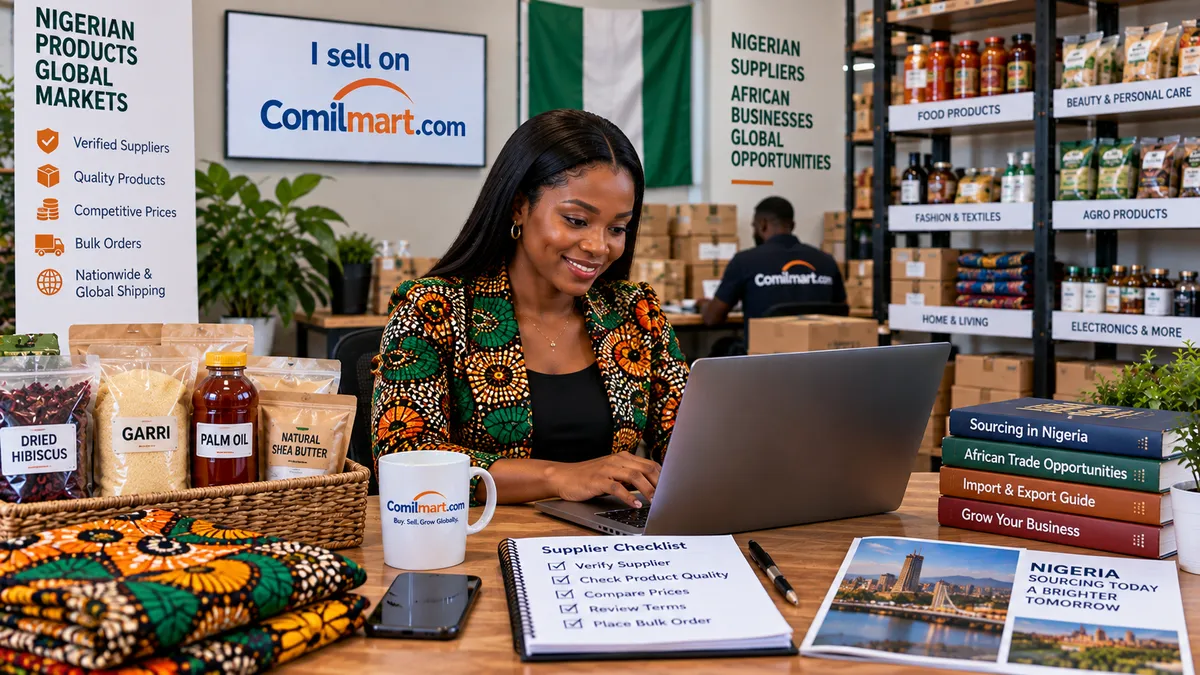
The Nigerian documentation trail
Which documents matter depends on what the supplier makes. Here is what each one means and how to check it.
CAC registration. Every genuine company or registered business name should have an RC (company) or BN (business name) number. The CAC offers a free public search at search.cac.gov.ng where you can look a supplier up by name or number. Check that the RC or BN number matches the certificate you were shown, and that the status reads Active rather than Inactive or Struck Off.
Tax ID (TIN). The Federal Inland Revenue Service has been replaced by the Nigeria Revenue Service (NRS) under the Nigeria Revenue Service (Establishment) Act, 2025, so older paperwork may carry the FIRS name. The NRS issues Taxpayer Identification Numbers free of charge, and a registered manufacturer should have one.
NAFDAC registration. Food, drugs, cosmetics, chemicals and similar consumer products made in or imported into Nigeria must be registered with NAFDAC, product by product. Ask for the NAFDAC number for the exact product you want to buy, and compare it with what is printed on the pack.
SON and MANCAP. The Standards Organisation of Nigeria runs the Mandatory Conformity Assessment Programme (MANCAP) for locally manufactured products. A MANCAP certificate carries a unique identification number, is valid for three years, and is backed by regular quarterly inspections, so it is a meaningful quality signal for packaged goods, plastics and building products.
NEPC and export paperwork. A first-time exporter is expected to hold CAC registration, a TIN, an export proceeds account with an authorised bank, and an exporter's certificate from the Nigerian Export Promotion Council. Each shipment then needs a Form NXP (or NCX for non-commercial exports) completed on the Central Bank's Trade Monitoring System, and customs documents are submitted through Customs' B'odogwu platform. Licensed customs agents are required for clearance.
A step-by-step verification checklist
- Ask for the company's registered name and RC or BN number, then confirm it on the CAC public search.
- Request the NAFDAC number (food, cosmetics, drugs) or MANCAP certificate (packaged and manufactured goods) for the specific products you want.
- Ask for a live video walkthrough of the factory or warehouse, not only photos.
- Contact two or three references or past customers.
- Order a paid sample and check it against the written specification before you negotiate volume.
- Agree MOQ, price, lead time, and payment terms in writing before any money moves.
If you source through Comilmart, much of this is already done: the Verified badge process checks registration, product and facility evidence, you can browse the supplier directory, chat directly with the supplier, and request a sample before committing to a bulk order.
Categories where Nigeria genuinely excels
Ankara and other African print textiles, leather goods, cassava and grain-based food products, shea and cosmetic ingredients, and increasingly, packaged consumer goods aimed at both domestic and export markets, are all categories where Nigerian manufacturers compete well on quality and price.
Textiles and Ankara. Order fabric samples from several suppliers and compare print and finish, and confirm whether the supplier manufactures or resells.
Leather and footwear. Aba, in Abia State, is the centre of the country's footwear and leather goods trade. BusinessDay has reported that the Aba cluster, which makes shoes, belts and bags, turns out around one million pairs of shoes a week, and that the Leather Product Manufacturers Association of Abia State (LEPMAAS) brings its operators together. Kano has long been associated with leather tanning and hides and skins.
Cassava and grain foods. Nigeria was the world's largest cassava producer in FAO data for 2019, at about 59 million tonnes, which is why garri, flour and starch products are plentiful and competitively priced. For anything sold as food, insist on a NAFDAC number, and browse groceries and food if you are buying in smaller quantities.
Shea and cosmetics. Anything applied to skin or hair falls under NAFDAC cosmetics rules, so ask for registration and an ingredient list, and order a sample first.
Plastics and building materials. For manufactured products, ask whether the factory holds a SON MANCAP certificate, and test samples against the specification. Buyers of inputs can explore construction materials and raw materials and chemicals.
Northern and southern hubs
Nigeria's supply base is spread across several commercial centres, and each has its own character. Kano, in the north, has been a trading city for centuries and is known for groundnuts, hides and skins, leather tanning and textile dyeing. In the south, Lagos is the main gateway for sea freight, while Onitsha and Aba serve the south-east. For city-by-city detail, see our guides to wholesale suppliers in Onitsha, Kaduna, Port Harcourt, and Ibadan.
Payment safety and shipping basics
Never pay the full amount to a personal account or in cash on the strength of a chat. Use a platform that holds payment until delivery is confirmed. Comilmart holds payment until you confirm delivery. Trade financing is also available. Read more on buyer protection.
For shipping, most sea freight leaves through the Lagos ports at Apapa, Tin Can Island and the newer Lekki Deep Sea Port and Lagos airfreight suits smaller, urgent consignments. Congestion has long been an issue at the older terminals, so build extra time into your schedule and agree who handles export documentation in writing.
Frequently asked questions
How do I check that a Nigerian company is really registered? Use the free CAC public search at search.cac.gov.ng and match the RC or BN number against the certificate, checking that the status is Active.
Do all products need NAFDAC registration? Not all, but food, drugs, cosmetics and chemical products do, and each product is registered separately.
Can I request a sample before a bulk order? Yes. Ordering a sample first is the best way to confirm quality, and a reputable supplier will agree to it.
Getting started
The safest path is also the simplest: create a free buyer account, browse Verified Nigerian suppliers by category, and request quotes from two or three before committing to your first order. For the broader context on sourcing from the continent as a whole, see our complete guide to sourcing wholesale from Africa.