
Sourcing & Trade Guide
How to Find Verified Wholesale Suppliers in Ghana
Comilmart Team
September 9, 2026
Ghana holds a genuinely strong global reputation in a handful of categories — cocoa and cocoa derivatives, shea butter and cosmetic ingredients, and Kente and other traditional textiles chief among them. That reputation is well-earned, but it also means Ghana attracts more than its share of resellers and middlemen presenting themselves as manufacturers. Knowing how to tell the difference matters more here than almost anywhere else on the continent.
Why verification matters in Ghana
Several of Ghana's flagship products are regulated, and some are protected by law. Raw cocoa beans can only be exported by COCOBOD's marketing arm or licensed exporters. Kente now has Geographical Indication status, which restricts the name to cloth woven by approved artisans. Food and cosmetics fall under the Food and Drugs Authority. A supplier who is vague about any of this is either a reseller or is operating outside the rules, and that risk lands on you as the buyer.
Where to actually look
1. Verified marketplaces first
Starting with a platform that does real verification work removes most of the guesswork. On Comilmart, Ghanaian manufacturers go through a documented verification process — business registration and product or facility evidence — before earning a Verified badge.
2. The Ghana Export Promotion Authority
The Ghana Export Promotion Authority (GEPA) is the national body responsible for developing and promoting Ghanaian exports, and requires registered exporters to go through it as part of their export licensing process — a genuine manufacturer with export ambitions should be able to speak knowledgeably about this process, even if they haven't completed it yet.
3. Registrar General's Department
Every legitimate Ghanaian business should be able to point to its registration with the Registrar General's Department — the first step in Ghana's export licensing process, ahead of GEPA registration itself.
How Ghana's export process works
Knowing the official path lets you ask better questions. In outline, an exporter registers the business with the Registrar General's Department, obtains a tax identification number from the Ghana Revenue Authority (GRA), and then registers with GEPA, which involves submitting the business certificates. The relevant permit-issuing agency inspects the premises and production facilities and makes a recommendation to GEPA, which then issues the registration certificate.
After that, many products need their own permits. GRA's export guidance lists COCOBOD for cocoa, coffee, shea nuts and cashew nuts, the Ghana Standards Authority for manufactured goods, the Food and Drugs Authority for certain food products such as palm oil, and the Environmental Protection Authority for chemicals. Ask any prospective supplier which of these steps they have completed and which agency covers their product.
The Food and Drugs Authority (FDA Ghana) registers food and cosmetics, and licenses manufacturing and storage facilities. For anything you plan to eat or put on skin, a registered product and a licensed facility are reasonable things to expect.
A step-by-step verification checklist
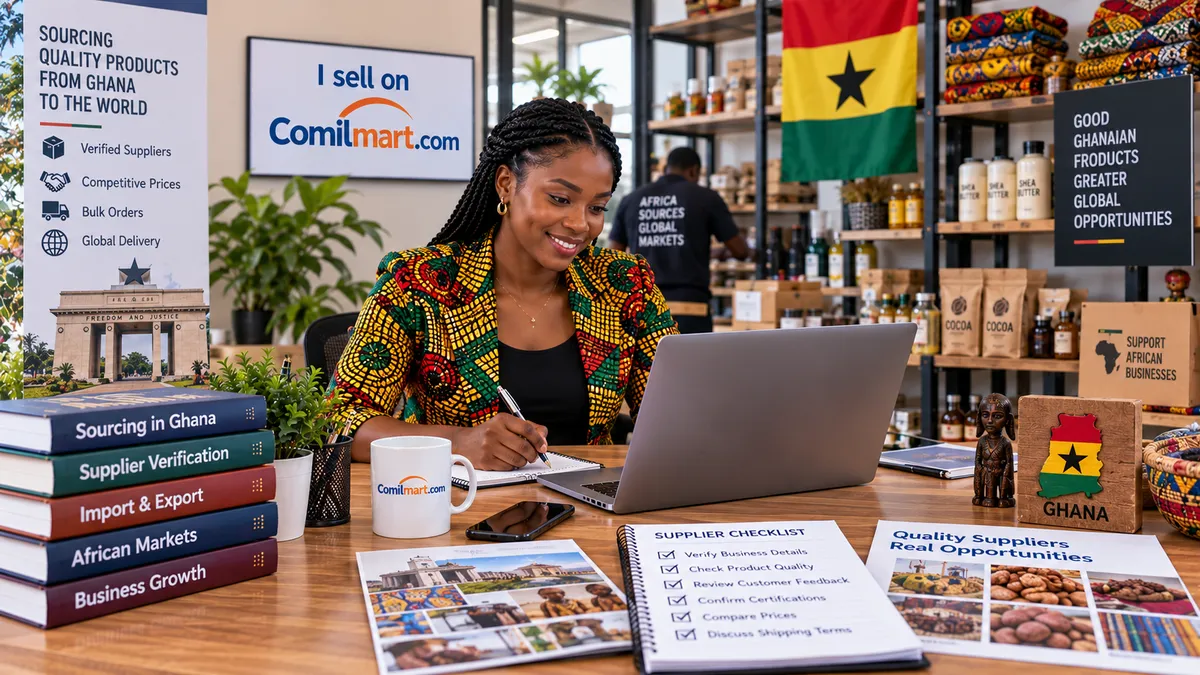
- Confirm the company exists. Ask for the registered business name and certificate from the Registrar General's Department, and check that the name on invoices matches it.
- Check tax standing. A genuine exporter will have a GRA tax identification number and should be able to explain their tax compliance.
- Ask for their GEPA registration or, if they are new to exporting, their plan and timeline for completing it.
- Request product-relevant certificates. Depending on the product, this may mean FDA registration, Ghana Standards Authority certification, or voluntary certificates such as organic or fair-trade.
- See the operation. Arrange a live video walk-through of the production site, or a site visit through a trusted local agent.
- Order samples first. Test samples against your specification before committing to a bulk order, and compare the sample with what you receive in the first shipment.
Red flags to watch for
- A "manufacturer" who can't clearly explain their own production process when asked
- No willingness to provide a sample before a bulk cocoa, shea, or textile order
- Contact only through informal channels, with no registered business name you can independently verify
- Pricing that seems too good to be true relative to known market rates for cocoa derivatives or shea butter — often a sign of a reseller cutting corners rather than a genuine processor
Categories where Ghana genuinely excels
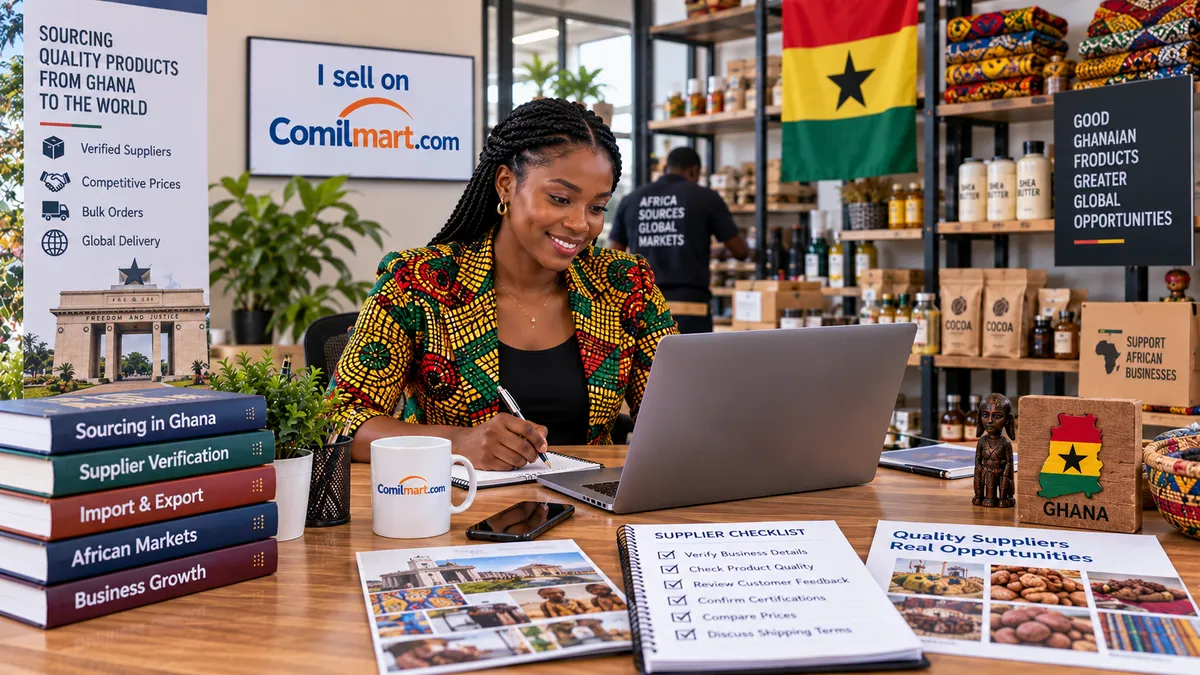
Cocoa butter, cocoa powder, and other cocoa derivatives; raw and refined shea butter; traditional and modern textiles including Kente cloth; and a growing processed food sector built around cassava, plantain, and other staple crops are all areas where Ghanaian manufacturers have a strong, well-earned reputation.
Sourcing by category
Cocoa and cocoa derivatives. COCOBOD, through its Cocoa Marketing Company, controls the marketing of raw cocoa beans, and only that company or licensed cocoa exporters can legally export them. Private buyers should therefore be wary of anyone offering raw beans outside those channels. Processed products are different: once cocoa is converted to butter, liquor or cake, it is no longer under the sole control of the Cocoa Marketing Company, and licensed processors can sell these products to international buyers, subject to normal customs and food safety rules. For most wholesale buyers, sourcing cocoa butter or powder from a licensed processor is the practical route.
Shea. Raw shea nuts are among the products that need a COCOBOD permit to export, and Ghanaian officials announced in 2025 that the government planned a phased ban on raw shea nut exports from 2026 to push production toward local processing. Check the current rules before planning any raw-nut purchase. Processed shea butter from established Ghanaian processors is the safer focus, and for cosmetic use ask about FDA registration. Raw materials and ingredient buyers can also browse our raw materials and chemicals category.
Kente and textiles. Kente is traditionally strip-woven by hand, with the Asante and Ewe peoples among its makers, and Bonwire and Adanwomase are among the best-known weaving towns. UNESCO inscribed Kente craftsmanship as intangible cultural heritage in December 2024, and in September 2025 Ghana registered Kente as a Geographical Indication covering five weaving centres in the Ashanti and Volta regions: Adanwomase, Bonwire, Agotime Kpetoe, Agbozume and Tafi Atome. Reports say the scheme uses licensed artisans and QR codes for buyer verification. If a supplier sells cloth as Kente, ask where it was woven and whether it is handwoven or a printed Kente-style fabric, which are priced and marketed differently.
Processed foods. For packaged foods such as cassava, plantain and other staple-based products, look for FDA registration of the product and a licensed production facility, plus any Ghana Standards Authority certification the supplier claims.
Payment safety and shipping basics
Never send a large upfront payment to an individual's personal account or to a name that does not match the registered business. Agree payment terms in writing, tie them to samples and delivery milestones, and keep all communication and invoices on record. On Comilmart, payment is held until you confirm delivery, and our buyer protection page explains how that works. Trade financing is also available for qualifying orders.
For shipping, Tema is Ghana's largest port and handles most of the country's international maritime trade, including containers and general cargo. Takoradi, in the west, is the second busiest and is associated with cocoa, timber and minerals. Time-sensitive or high-value goods typically move by air through Kotoka International Airport in Accra. For regional sourcing hubs, see our guides to Kumasi, Takoradi and Tamale.
Frequently asked questions
Can I buy raw cocoa beans directly from a Ghanaian supplier? Generally not. Only COCOBOD's Cocoa Marketing Company and licensed cocoa exporters can legally export raw beans. Processed derivatives such as cocoa butter and powder from licensed processors are much easier for private buyers to source.
How do I know a supplier is a real manufacturer and not a middleman? Ask for registration documents, product certificates, a live video walk-through of the facility and samples. A genuine producer can explain the process in detail and will usually welcome these requests.
Do I need to order samples first? Yes, wherever possible. Samples let you check quality, packaging and documentation before committing, and a supplier who refuses them is a red flag. You can request them through Comilmart's sample ordering.
Can I send a request to several suppliers at once? Yes. Post a request for quotation (RFQ) and compare responses, or message suppliers directly through chat before you decide.
Getting started
Create a free buyer account to browse Verified Ghanaian suppliers, and see our complete guide to sourcing wholesale from Africa for guidance that applies across the whole continent.