

Sourcing & Trade Guide
How to Build a Long-Term Supplier Relationship That Actually Lasts
Comilmart Team
August 22, 2026
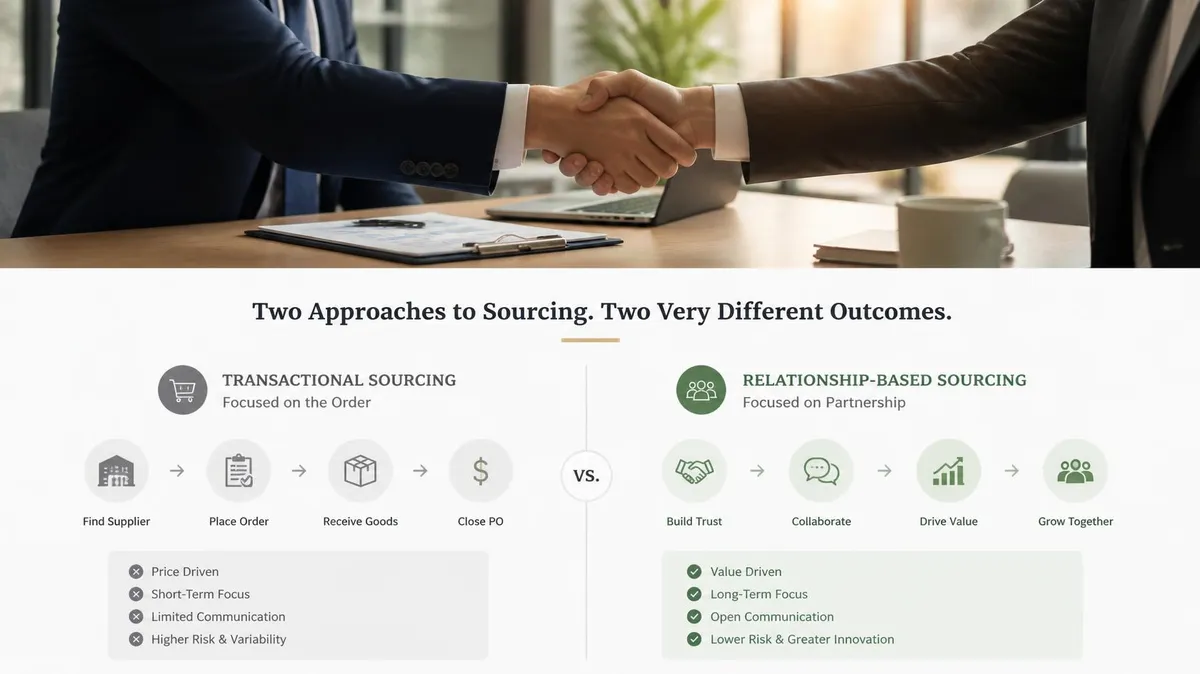
Buyers often approach sourcing as a series of individual transactions — find a supplier, negotiate a price, place an order, repeat. But the genuinely best sourcing outcomes tend to come from real, ongoing relationships with a smaller number of trusted suppliers, built deliberately over time. A strong supplier relationship delivers benefits a one-off transaction never can — better pricing over time, priority during capacity crunches, more flexibility, and a supplier who's genuinely invested in your success rather than just this order. This guide covers what actually builds that kind of relationship.
Why relationship-based sourcing genuinely outperforms transactional sourcing
A supplier who knows you as a reliable, repeat buyer treats you differently than one meeting you for the first time on a single order. Priority during busy periods, more willingness to accommodate a specific request, genuine transparency about problems before they become your problem, and often, better pricing over time as trust reduces the risk premium a supplier builds into pricing for unfamiliar buyers — these are all real, practical benefits that a purely transactional approach to sourcing, constantly switching suppliers to chase the marginally lowest price on each individual order, simply can't access.
Start with genuine due diligence, not just the lowest price
Our guide on vetting an overseas supplier before paying covers this diligence step in detail.
A relationship built on genuine trust starts with choosing the right supplier in the first place, not just the cheapest one for a single order. Applying real diligence — verification, sample ordering, honest communication testing — before committing to a first order sets the foundation for a relationship actually worth investing in going forward, rather than building a relationship with a supplier who turns out to be unreliable once you're already committed.
Communicate consistently, not just when placing an order
Relationships genuinely deepen through communication beyond the transactional minimum required to place and fulfill an order. Checking in periodically, even when you don't have an active order, sharing relevant context about your business's plans or growth (where appropriate), and responding promptly and thoughtfully to a supplier's own communication all signal that you view this as an actual ongoing relationship rather than a series of disconnected transactions.
Be a genuinely easy buyer to work with
Suppliers value reliable, low-friction buyers as much as they value price — a buyer who provides clear, complete specifications upfront, pays on the agreed terms without delay or dispute, and communicates changes or issues promptly rather than letting them surface as a surprise closer to a deadline, is genuinely more valuable to a supplier than a marginally higher-paying buyer who creates constant friction and unpredictability. Being this kind of buyer isn't just good practice for its own sake — it's a genuine, practical way to earn better treatment and terms over time.
Give a supplier a real reason to prioritize you
Suppliers naturally prioritize their most valuable, most reliable buyers, particularly during busy periods when their capacity is genuinely constrained. Being transparent about your actual order volume trajectory — letting a supplier know you're planning to grow your orders over time, if that's genuinely true — gives them a real reason to invest in the relationship now, ahead of that growth materializing, rather than treating you as just another one-off order among many.
Handle problems as relationship moments, not just transaction failures
Every supplier relationship of real length will eventually encounter a problem — a quality issue, a delayed shipment, a miscommunication. How both parties handle that problem often matters more for the long-term relationship than the fact that a problem occurred at all. Approaching a problem with a genuine, specific explanation of the issue and a reasonable, constructive request for resolution — rather than an immediate escalation to threats or ultimatums — gives a supplier the chance to demonstrate their own commitment to the relationship through how they respond, which is often more informative than anything that happened before the problem arose.
Revisit and renegotiate terms as the relationship matures
A relationship that's genuinely grown over multiple successful orders is a reasonable basis for revisiting original terms — pricing, payment terms, MOQ flexibility — that may have been set conservatively for a first, unproven relationship. Bringing this up directly and specifically, referencing the actual track record you've built together, is a natural and reasonable part of a maturing relationship, not an awkward renegotiation from scratch.
Know when a relationship genuinely isn't working, despite investment
Not every supplier relationship, even one you've genuinely invested time and effort into, turns out to be the right long-term fit — consistent quality issues, repeated communication problems, or a supplier who doesn't reciprocate the investment you're making are all real signals that a relationship, despite the effort invested, may not be worth continuing to prioritize. Recognizing this and being willing to invest relationship-building effort elsewhere, rather than continuing to invest in a relationship that consistently isn't delivering, is just as important as knowing how to build a good relationship in the first place.
Balancing relationship depth with genuine market awareness
Building strong, ongoing supplier relationships doesn't mean abandoning awareness of the broader market — periodically confirming your primary supplier's pricing and terms remain genuinely competitive, without necessarily switching suppliers over marginal differences, keeps the relationship honest on both sides and ensures loyalty doesn't quietly become complacency that costs you real value over time.
Frequently asked questions
How many orders does it typically take before a relationship feels genuinely established?
There's no fixed number — it depends more on the consistency and quality of the relationship across whatever orders have happened than a specific count, though most buyers and suppliers find a real sense of established trust develops somewhere after several consistently successful orders over a meaningful period of time.
Is it reasonable to work with multiple suppliers in the same product category, or does that undermine relationship-building?
Working with a small number of trusted suppliers per category, rather than either a single supplier or many, is often a reasonable balance — it maintains genuine relationship depth with your primary suppliers while providing reasonable resilience if any single relationship encounters a real problem.
Should I tell a supplier directly that I'm interested in a long-term relationship, or let it develop naturally?
Being direct about this, where it's genuinely true, tends to help — it gives a supplier real context for why investing in the relationship makes sense, rather than leaving them to guess whether you're a one-off buyer or someone genuinely interested in an ongoing partnership.
The bottom line
The strongest, most valuable sourcing outcomes rarely come from constantly chasing the marginally lowest price across many one-off transactions — they come from genuine, deliberately built relationships with a smaller number of trusted suppliers, developed through consistent communication, reliability, and honest handling of the inevitable problems that arise along the way. Investing in this kind of relationship-based approach pays real, compounding dividends over time that transactional sourcing simply can't match.