
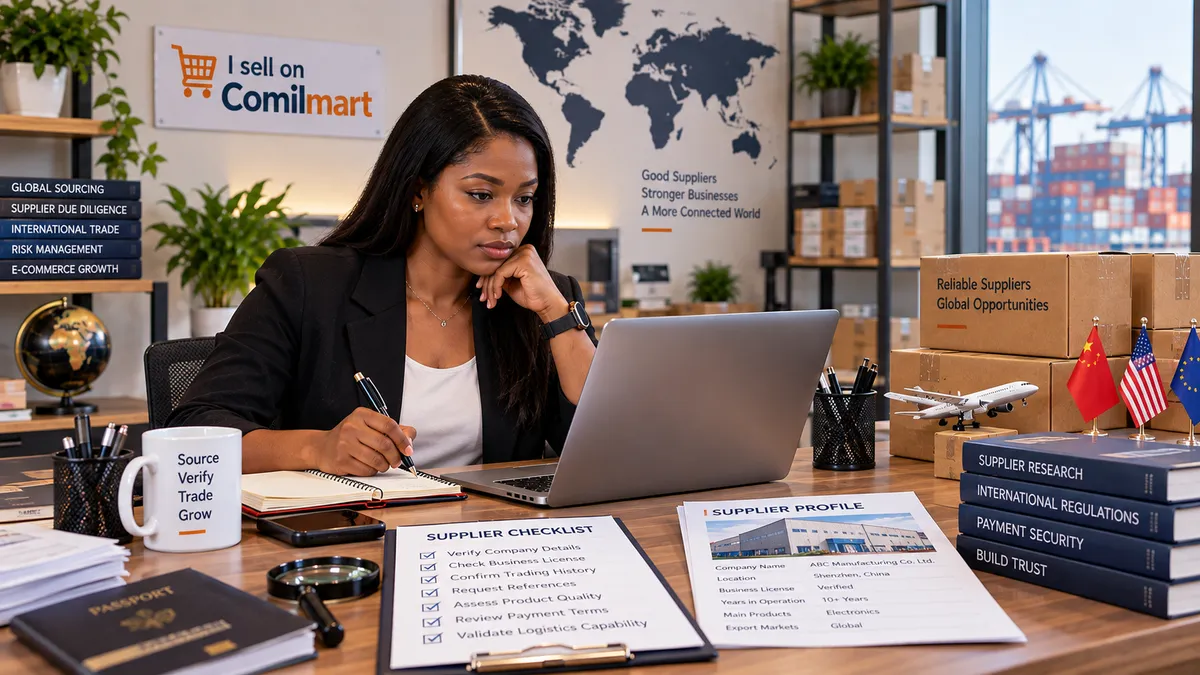
Sourcing & Trade Guide
How to Vet an Overseas Supplier Before Wiring a Single Dollar
Comilmart Team
August 22, 2026
Sourcing from an overseas supplier means you're often working without the safety nets you'd have domestically — no easy in-person visit, no familiar local legal recourse, and often, no shared language or business culture to fall back on for reading a situation intuitively. This makes genuine, systematic vetting more important, not less, before any money changes hands. This guide walks through a practical vetting process worth actually working through, not just skimming.
Step one: verify the business actually exists and is legitimate
Before evaluating anything else, confirm the supplier is a genuine, registered business rather than an individual or shell operation with no real accountability. Ask directly for business registration documentation, and where practical, cross-check this against your destination country's or the supplier's home country's official business registry, many of which are publicly searchable online. A legitimate business generally has no hesitation providing this; reluctance or evasiveness at this basic step is a meaningful early warning sign.
On a marketplace platform, look specifically for verification that involved a real documentation check by the platform itself, rather than a self-reported "verified" label — this is exactly the kind of foundational check a genuine verification process is designed to have already done on your behalf.
Step two: request real, specific evidence of production capability
Ask for actual photos or video of the specific product you're interested in, ideally showing the real production facility, not generic stock imagery. A legitimate manufacturer with real production capability generally has no difficulty providing this and often shares it readily, since it's a point of genuine pride in their operation. Vague responses, reused generic images, or reluctance to share anything beyond polished catalog photos is worth treating as meaningful information rather than dismissing as a minor inconvenience.
Step three: check for a real track record
Look for evidence of actual completed transactions — sales history, buyer reviews, and how long the business has genuinely been operating and exporting. A brand-new supplier with zero track record isn't automatically disqualifying, but it does mean you're taking on more of the "figuring it out together" risk than you would with an established supplier, and should factor that into how much you're willing to commit on a first order.
Read actual review content, not just star ratings — specific, detailed reviews describing genuine experiences carry more weight than a high average built on vague, generic feedback.
Step four: test communication before you test the product
How a supplier communicates during the sales process — before you've paid anything — is one of the single best predictors of what working with them will actually be like afterward. Ask several specific, detailed questions and pay attention to whether the answers are specific and consistent, or vague and generic. Notice response time, and whether it stays consistent across several exchanges rather than being fast only in the initial, most enthusiastic stage of the conversation. A supplier who is thorough and responsive before any money has changed hands is showing you real information about what to expect after.
Step five: order a sample before committing to full volume
This is genuinely one of the highest-value steps in the entire vetting process, and worth treating as close to non-negotiable for a new supplier relationship of any real size. A sample lets you evaluate actual product quality, verify it matches what was described and shown, and see firsthand how the supplier handles a real transaction from payment through to delivery — all at a small fraction of the cost of a full order. If a sample reveals a real problem, you've learned that cheaply; if it goes well, you've built genuine confidence before committing significant money.
Step six: understand and use buyer protection properly
Comilmart's buyer protection is exactly this backstop — payment held until you confirm delivery, regardless of how thorough your upfront vetting was.
Even after thorough vetting, things occasionally go wrong for reasons beyond anyone's control — a shipping delay, a documentation issue, a genuine miscommunication. This is precisely why paying through a platform's protected payment system, rather than a direct wire transfer to an unfamiliar supplier, matters so much for overseas sourcing specifically. Payment held until you confirm delivery gives you real, structural leverage that a direct payment simply doesn't provide — treat this as your essential backstop, not an optional extra, especially for a first international transaction with a new supplier.
Red flags that should genuinely give you pause
A few specific patterns are worth taking seriously if you encounter them: pricing dramatically below every comparable listing with no clear, specific explanation; pressure to pay outside the platform's protected payment system, regardless of the reason offered; reluctance or evasiveness when asked for real production evidence; and urgency tactics pushing you to decide quickly, especially before you've had time to complete your own diligence. None of these alone is automatically disqualifying, but multiple red flags stacking together is a strong signal to walk away entirely.
Building a simple vetting checklist you can reuse
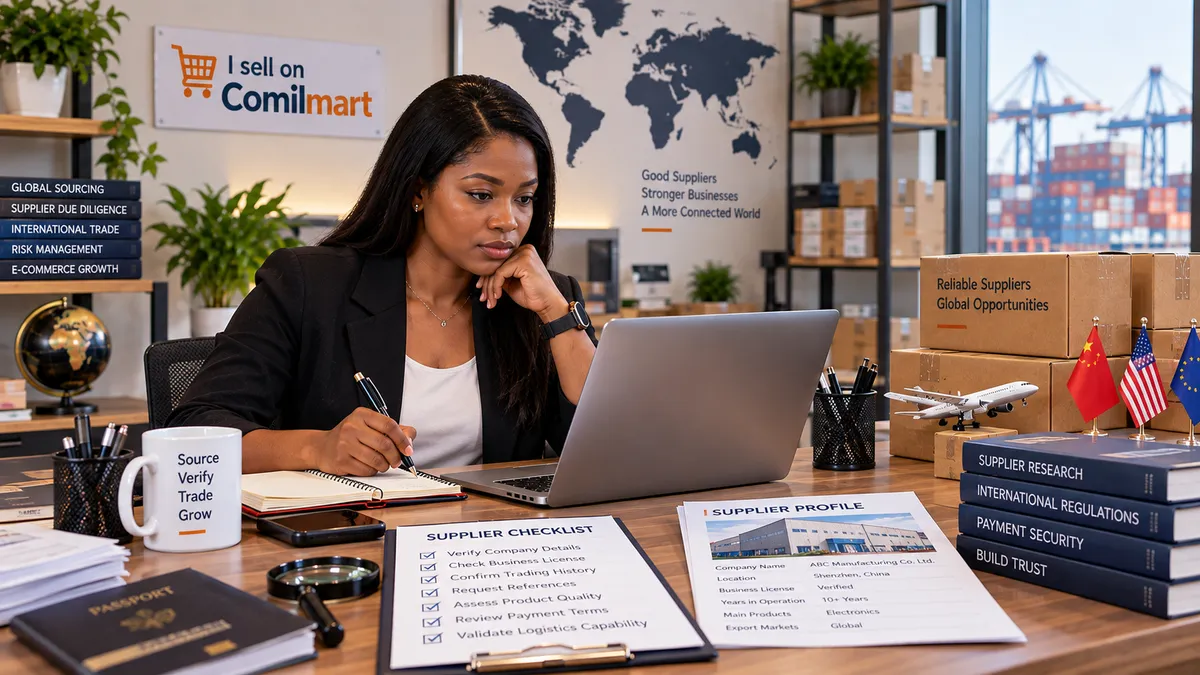
Rather than reinventing this process for every new supplier, it's worth keeping a simple, consistent checklist you work through each time: Is the business genuinely verified with real documentation, not just a self-reported claim? Have they shared real production photos or video when asked specifically? Do they have a genuine track record with specific, detailed reviews? Has communication been specific, consistent, and responsive throughout? Is a sample order available, and have you used it before committing to full volume? Are you paying through a protected payment system rather than a direct transfer?
Frequently asked questions
How much of this vetting process is really necessary for a small first order?
Even for a smaller order, the core steps — verification check, requesting real photos, and paying through a protected payment system — are worth doing regardless of order size, since they take relatively little time. The sample-ordering step specifically becomes more clearly worthwhile as your intended order size and future relationship value grow.
What if a supplier seems legitimate on every check but something still feels off?
Trust that instinct — it's often picking up on something real, even if you can't immediately articulate exactly what triggered it. There's no obligation to proceed with a supplier who checks every formal box but still doesn't feel right; plenty of other legitimate suppliers exist for most product categories.
Is it reasonable to ask a supplier for references from previous buyers?
Yes, though not every supplier will readily provide this, and its absence isn't automatically disqualifying — but if a supplier does offer genuine references, following up with them directly is a worthwhile additional verification step for a larger, more significant commitment.
The bottom line
Vetting an overseas supplier thoroughly, before any money changes hands, is the single highest-leverage thing you can do to protect yourself in international sourcing. None of the individual steps take enormous time on their own, but together they meaningfully shift the odds in your favor — and combined with genuine buyer protection as your backstop, they turn overseas sourcing from an act of faith into a well-managed, informed business decision.