
Sourcing & Trade Guide
Understanding Payment Terms in International Trade: LC, TT, and Escrow Explained
Comilmart Team
August 22, 2026
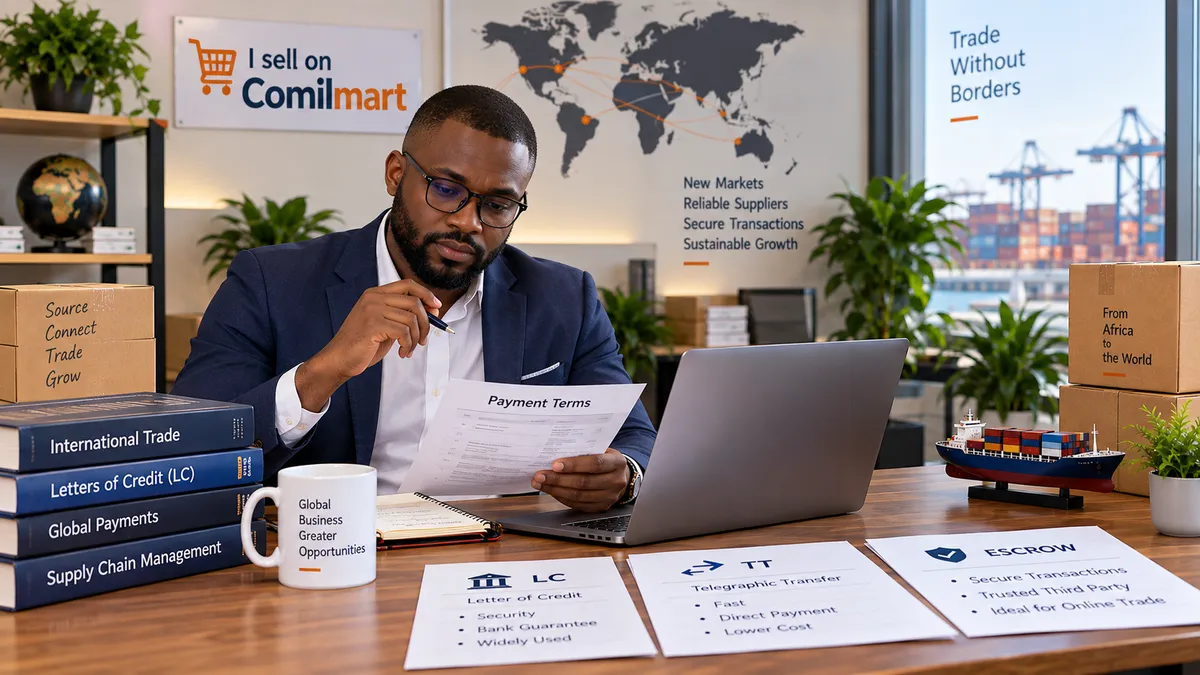
Domestic purchases typically involve a simple, familiar payment process — a card charge, a bank transfer, done. International trade, particularly larger wholesale transactions, often involves payment mechanisms specifically designed to manage the real trust and logistics challenges of a transaction between parties who may never meet, operating under different legal systems, with significant money and goods changing hands over weeks or months. Understanding these mechanisms — letters of credit, telegraphic transfer, and escrow arrangements — helps you navigate larger international transactions with real confidence.
Telegraphic Transfer (TT): the straightforward bank-to-bank option
Telegraphic transfer, sometimes called wire transfer, is simply an electronic bank-to-bank payment — the buyer's bank sends funds directly to the seller's bank. This is the most straightforward and commonly used payment method for many international trade transactions, particularly smaller to mid-sized orders and transactions between parties who've built some existing trust.
TT is often structured with a deposit paid upfront (commonly 30%, though this varies) and the balance paid upon a defined milestone — shipment, or sometimes upon the buyer's confirmation of receipt. This structure gives both parties some protection: the seller has commitment and partial payment before committing resources to production, while the buyer isn't paying the full amount before any progress has genuinely been made.
The real limitation of TT is that once funds are sent, there's limited built-in recourse if something goes wrong — it relies substantially on trust and the underlying relationship, or on separate dispute mechanisms outside the payment method itself, rather than the payment structure providing protection on its own.
Letter of Credit (LC): bank-guaranteed payment
A Letter of Credit, governed by the International Chamber of Commerce's Uniform Customs and Practice rules, is a formal, bank-issued guarantee that a seller will be paid, provided they meet specific, documented conditions — typically providing agreed shipping and quality documentation confirming the goods were shipped as specified. The buyer's bank issues the LC, effectively guaranteeing payment to the seller once the seller presents the required documents proving they've fulfilled their side of the agreement, rather than the seller relying purely on the buyer's own promise to pay.
LCs provide meaningfully more structural protection than TT for larger transactions, since a bank's formal guarantee carries real weight, and the documentation requirements create a paper trail that supports both parties if a dispute arises. This comes at real cost, though — LCs involve bank fees on both sides, and the documentation and approval process adds time and complexity compared to a straightforward TT. LCs tend to make the most sense for larger transactions where the added cost and complexity is genuinely justified by the transaction size and the additional protection it provides.
Escrow: a third party holds the funds
Escrow arrangements involve a neutral third party — which could be a dedicated escrow service, or increasingly, built directly into a marketplace platform's own payment system — holding the buyer's payment until agreed conditions are met, typically the buyer confirming satisfactory receipt of the goods. This is conceptually similar to what a Letter of Credit accomplishes through the banking system, but implemented through a different mechanism, often more accessible and lower-cost for smaller and mid-sized transactions than a formal bank LC would be.
This is exactly the mechanism behind marketplace buyer protection — payment is held by the platform (functioning as the escrow party) until delivery is confirmed, giving the buyer real leverage and the seller genuine assurance that a serious, committed payment is already secured, without either party needing to navigate the more formal, costly LC process.
Comparing the three approaches
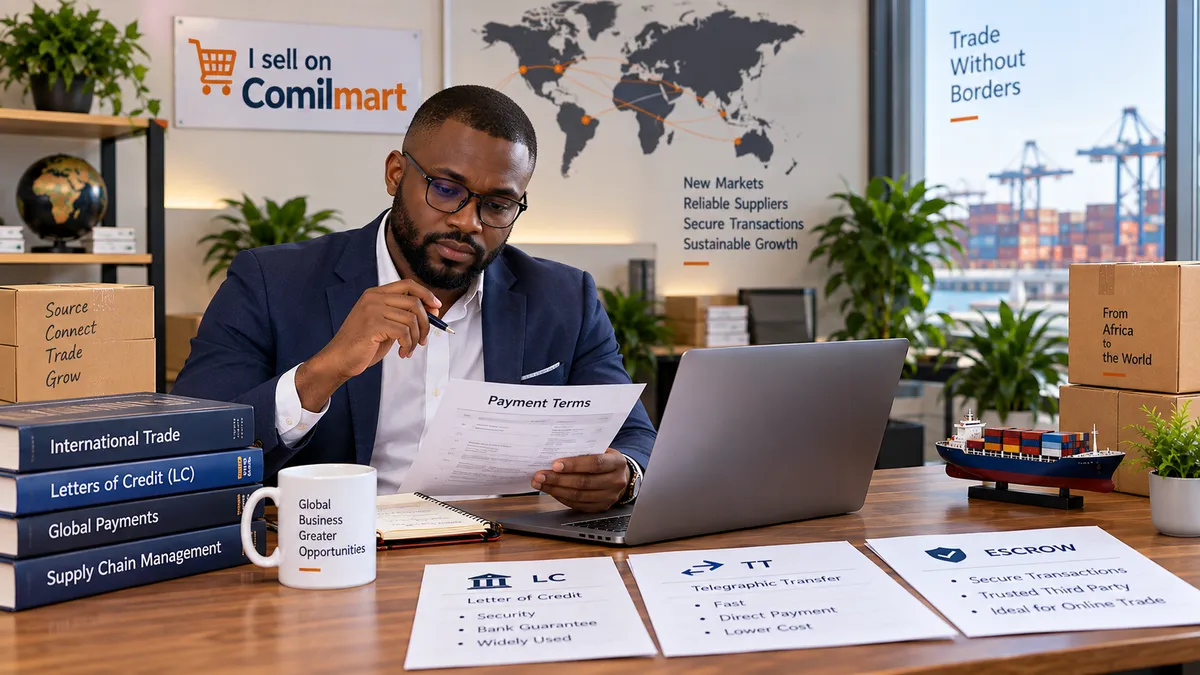
- TT — fastest and simplest, but relies most heavily on trust and offers the least built-in structural protection if something goes wrong.
- LC — strongest formal protection through bank guarantee, but involves real cost, complexity, and time, making it most suitable for larger transactions where this is justified.
- Escrow (including marketplace-based buyer protection) — a genuinely practical middle ground, offering real payment protection without the full cost and complexity of a formal LC, particularly well suited to small and mid-sized transactions.
Why marketplace-based escrow is often the most practical choice
This is exactly what Comilmart's buyer protection provides — funds held until delivery is confirmed, without the cost and complexity of a formal LC.
For most wholesale transactions conducted through an online marketplace specifically, using the platform's own built-in payment protection — functioning as an escrow mechanism — is often the most practical choice, combining genuine payment security with far less complexity and cost than arranging a formal Letter of Credit independently. This is precisely why paying through a marketplace's protected payment system, rather than arranging a direct TT transfer outside the platform, matters so much: it gives you meaningful protection similar in spirit to what a formal LC would provide, without the corresponding cost and complexity.
When a formal LC genuinely makes sense despite the added complexity
For very large transactions, or ongoing relationships involving substantial recurring order values, the added protection and formality of a Letter of Credit can genuinely be worth the cost and complexity involved — particularly for a relationship where the transaction size is large enough that even a small percentage cost for LC arrangement fees represents good value relative to the protection gained. This is less commonly relevant for the typical wholesale transaction sizes conducted through most online B2B marketplaces, where marketplace-based buyer protection generally provides sufficient, more accessible protection.
Practical advice for choosing a payment approach
For most buyers using an online marketplace for wholesale sourcing, the platform's own protected payment system generally represents the right balance of protection and practicality, without needing to independently arrange a separate escrow service or formal LC. For very large, custom transactions conducted outside a marketplace platform entirely, understanding whether TT with a trusted, established supplier, or the added protection of a formal LC, better fits the transaction size and risk involved is worth a direct conversation with your bank's trade finance team, who can advise specifically based on your transaction's actual scale and circumstances.
Frequently asked questions
Is TT ever a genuinely safe payment method for international trade?
It can be, particularly with an established, trusted supplier relationship built over multiple successful transactions — but for a new, unverified supplier relationship, TT alone (especially paid entirely upfront, outside a protected marketplace payment system) carries real risk without built-in structural protection.
Are Letters of Credit only relevant for very large corporate transactions?
They tend to make the most practical sense for larger transactions given their cost and complexity, but they're not exclusively for large corporations — any transaction of sufficient size where the added protection justifies the cost can reasonably use an LC, though for most smaller wholesale transactions, marketplace-based escrow protection is typically the more practical choice.
How does marketplace buyer protection actually compare to a formal bank escrow service?
Functionally similar in principle — funds held by a neutral party until agreed conditions are met — though marketplace buyer protection is typically faster to set up, lower cost, and better integrated into the actual purchase process than arranging a separate, independent escrow service would be.
The bottom line
International trade payment mechanisms exist specifically to manage the real trust and logistics challenges of cross-border transactions — TT offers speed and simplicity at the cost of built-in protection, formal LCs offer strong protection at real cost and complexity, and escrow arrangements, including marketplace-based buyer protection, often provide the most practical middle ground for typical wholesale transaction sizes. Understanding which mechanism fits your specific transaction helps you make an informed choice rather than defaulting to whichever method feels most familiar.