
Sourcing & Trade Guide
The Rise of Made-in-Africa: Why International Buyers Are Paying Attention
Comilmart Team
August 22, 2026
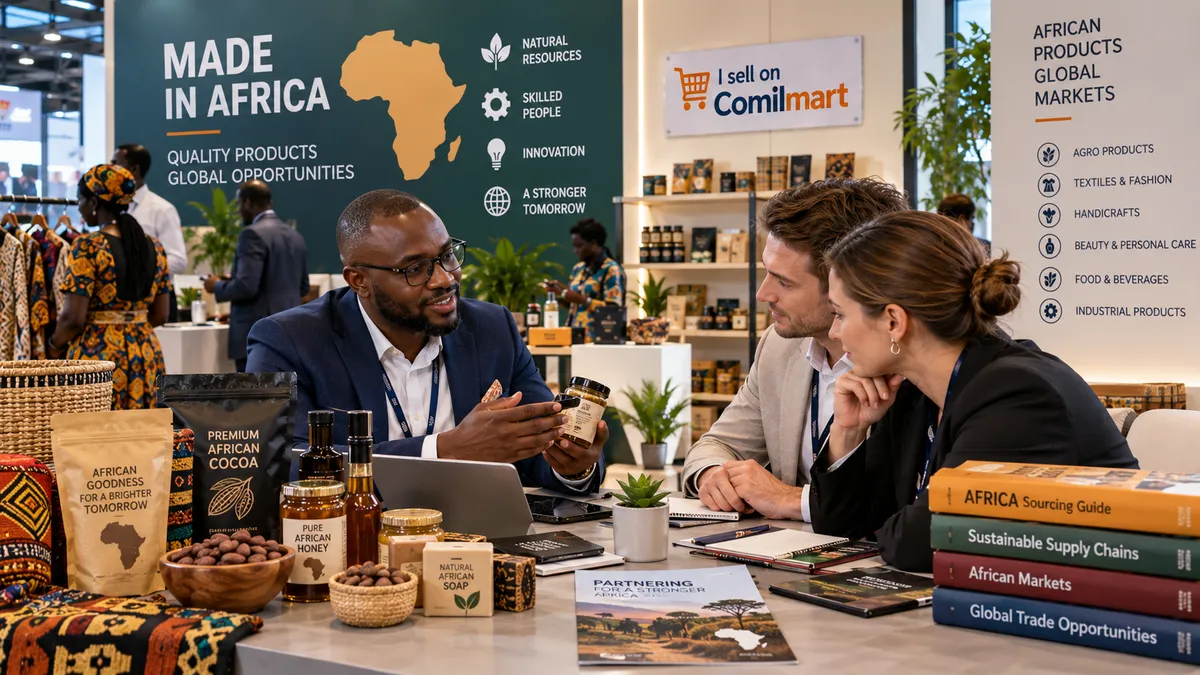
For much of recent economic history, Africa's relationship with global trade has been dominated by raw material and commodity export — cocoa beans, crude oil, raw minerals, unprocessed cotton — with the more valuable finishing and manufacturing steps happening elsewhere. That pattern is genuinely shifting. A growing "Made in Africa" movement is seeing more finished, manufactured, and processed goods produced on the continent and reaching international buyers directly. This guide looks at what's actually driving this shift and what it means for buyers.
Why this shift is happening now
Several genuine, converging factors have contributed to this shift rather than any single cause. Growing domestic and regional demand across Africa's own expanding middle class has justified real investment in local manufacturing capacity that didn't previously make economic sense when export was the primary market. Regional trade integration — through AfCFTA and existing frameworks like ECOWAS and the EAC — has expanded the addressable market for African-manufactured goods beyond any single country's borders. And a genuine recognition, at both government and business levels, that raw material export alone leaves substantial value being captured elsewhere has driven deliberate investment in local processing and manufacturing capability.
From raw material to finished product: real examples
This shift is most visible in categories where Africa has always had raw material strength, but is increasingly capturing more of the value chain locally:
- Cocoa — rather than exporting raw beans, growing capacity in cocoa butter, powder, and finished chocolate production, particularly in West Africa.
- Shea — moving from raw shea nut export toward refined, often certified organic shea butter ready for direct use in cosmetics and food products.
- Coffee — growing specialty and processed coffee export capacity, beyond raw green bean export, particularly from East Africa.
- Textiles — expansion from raw cotton export into actual garment and textile manufacturing across multiple regions.
- Leather — investment in finished leather goods production rather than raw hide export, particularly in East Africa.
Manufacturing beyond agro-processing
The Made-in-Africa shift isn't limited to agricultural processing — light manufacturing more broadly has grown across multiple African markets, including consumer goods, packaging materials, furniture, and increasingly, more complex manufactured products as investment and manufacturing expertise deepen. This broader manufacturing growth, alongside the more visible agro-processing shift, represents a genuinely wider transformation than a single-category story would suggest.
Quality perceptions are genuinely shifting too
A real, related shift has been happening in how international buyers perceive African-manufactured goods generally. Historical skepticism about manufacturing quality and consistency, which wasn't entirely unfounded in earlier periods of more limited manufacturing infrastructure, has genuinely been challenged by real, demonstrated quality from established African manufacturers across multiple categories. This doesn't mean quality diligence becomes unnecessary — it remains just as important as sourcing from any region — but the starting assumption among informed buyers has shifted meaningfully from "probably lower quality" toward "worth genuinely evaluating on its own merits."
What's driving international buyer interest specifically
Beyond the supply-side manufacturing growth itself, several factors are drawing international buyer attention toward African-manufactured goods specifically. Competitive pricing relative to some traditional manufacturing regions, particularly as labor and input costs have risen elsewhere, makes African manufacturing an increasingly attractive option purely on cost grounds for many product categories. Supply chain diversification has become a genuine strategic priority for many international buyers following recent years' disruptions, and African manufacturing represents a meaningful diversification option beyond traditional sourcing regions. And for some buyers and end consumers, an authentic "Made in Africa" story carries genuine brand value, particularly in categories like cosmetics, food, and craft goods where origin and authenticity matter to end buyers.
Challenges that remain genuinely real
It's worth being honest that the Made-in-Africa shift, while real and significant, doesn't mean every challenge has been solved. Infrastructure — particularly reliable power supply and transportation logistics in some markets — remains a genuine constraint for some manufacturers, affecting production consistency and lead times. Access to financing for manufacturing scale-up remains more limited for many African manufacturers than for competitors in some other regions, which can constrain how quickly production capacity grows even where demand exists. And manufacturing sophistication, while growing genuinely and rapidly in many categories, still varies considerably — meaning buyer diligence in evaluating a specific supplier's actual capability remains just as important as it would sourcing from anywhere else, rather than assuming uniform quality simply because "Made in Africa" carries positive momentum generally.
Ready to source directly from African manufacturers? Browse verified suppliers on Comilmart across these growing categories.
How buyers can genuinely participate in this shift
For buyers interested in engaging with growing African manufacturing capacity specifically, a few practical approaches help. Looking specifically at categories where the shift is most established — agro-processing in particular — offers the most mature, lowest-risk entry point, given the real infrastructure and export experience already built around these categories. Being open to a longer relationship-building process, including sample ordering and gradual volume scaling, rather than expecting to immediately place large orders at the same scale you might with an established supplier elsewhere, respects where individual manufacturers genuinely are in their own growth trajectory. And engaging directly and specifically with individual manufacturers' actual capabilities, rather than making broad assumptions based on general "Made in Africa" narrative, remains the most reliable way to find genuinely strong specific suppliers.
Frequently asked questions
Is "Made in Africa" a formal certification, or more of a general narrative?
It's more of a general narrative and trend than a single formal certification — specific product-level origin certification (like a formal certificate of origin) is the concrete, verifiable claim that matters for a specific transaction, rather than relying on the broader Made-in-Africa concept alone.
Which African manufacturing categories are most mature for a first-time buyer to explore?
Agro-processing categories with longer export histories — cocoa and shea products particularly — generally offer the most established infrastructure and buyer-familiar processes, making them a reasonable starting point before exploring newer or less established manufacturing categories.
Does this shift mean raw material export from Africa is declining?
Not necessarily declining in absolute terms, but the broader trend is toward capturing more value locally through processing and manufacturing alongside continued raw material trade, rather than raw export disappearing entirely — it's a genuine shift in emphasis and growth direction rather than a wholesale replacement.
The bottom line
The Made-in-Africa shift represents a genuine, multi-factor transformation — growing manufacturing investment, regional trade integration, and shifting international buyer perceptions all converging to create real opportunity in African-manufactured and processed goods, beyond the traditional raw commodity story. For buyers willing to engage with this shift directly and evaluate specific suppliers and categories on their genuine merits, it represents a meaningfully expanding set of sourcing options worth taking seriously.