
Sourcing & Trade Guide
How African Manufacturers Can Reach International Buyers Online
Comilmart Team
September 9, 2026
If you run a manufacturing business anywhere in Africa, there's a real and growing pool of international buyers actively looking for suppliers exactly like you — buyers who've read guides like the ones throughout this series and are specifically trying to find verified African manufacturers to work with. The gap most manufacturers face isn't lack of demand; it's not being findable, verifiable, and easy to work with for a buyer who doesn't already know you personally.
Why "being findable" matters more than it might seem
A genuinely excellent manufacturer with no meaningful online presence, no way for an international buyer to verify their business, and no straightforward way to request a quote is, from that buyer's perspective, functionally invisible — no different from not existing at all, regardless of how good the actual product is. Closing this gap doesn't require a large marketing budget; it requires putting the basic building blocks of trust and discoverability in place.
The building blocks of being genuinely findable and trustworthy
1. Formal business registration, properly documented
This is the foundation everything else builds on. International buyers, as covered throughout this series, are specifically taught to check for proper business registration before working with any new supplier — through bodies like Nigeria's NEPC, Ghana's GEPA, Kenya's KEPROBA, or South Africa's CIPC, depending on your country. If your registration isn't current, or you've never formally registered, this is genuinely the first step before anything else on this list matters.
2. Real photo and video evidence of your actual production
Buyers consistently cite this as one of the strongest trust signals — actual photos and video of your real production facility, equipment, and process, not stock imagery or photos borrowed from elsewhere online. This doesn't need to be professionally produced; genuine, clear smartphone photos and video of your actual operation are more convincing to a serious buyer than polished but generic-looking stock imagery that could belong to any business.
3. A presence on a platform that does verification for you
Rather than trying to build buyer trust entirely from scratch on your own website (which most international buyers have no established reason to trust on first encounter), listing on a marketplace that does documented verification work — checking your registration and production evidence before granting a Verified badge — gives buyers a trusted third party's confirmation rather than asking them to take your word alone. On Comilmart, this verification process is specifically designed around how African businesses actually register and operate, rather than a system built for a different region and loosely adapted.
4. Responsive, professional communication
International buyers, especially first-time ones sourcing from Africa, are often somewhat nervous about the process — responsive, clear, professional communication does a significant amount of work in building confidence, sometimes more than the product itself in the earliest stages of a relationship. Slow or inconsistent response times, even from a genuinely excellent manufacturer, cost real business from buyers who interpret this as a signal about reliability.
5. A willingness to start small
As covered throughout this series from the buyer's perspective, most serious international buyers want to start with a modest trial order before committing to significant volume — this is standard practice, not a lack of seriousness on the buyer's part. Manufacturers who resist this, insisting on large first orders, often lose buyers who would have become excellent long-term customers after a successful trial.
What buyers are actually evaluating in those first interactions
Understanding what's actually being assessed helps manufacturers present themselves more effectively. Buyers are typically evaluating: whether you can clearly and specifically describe your own production process and capacity (vagueness here is a significant red flag from the buyer's side); whether your pricing and MOQ are clearly stated rather than requiring extensive back-and-forth just to get basic numbers; whether you can provide a sample in a reasonable timeframe; and whether your registration and business details are consistent and verifiable across whatever channels the buyer checks.
Common mistakes that cost manufacturers real business
- Inconsistent information across different channels — a different company name, address, or contact detail on your marketplace listing versus your own website or social media creates doubt even when everything is actually legitimate, simply because it looks inconsistent to a buyer doing due diligence.
- Refusing to provide any evidence beyond product photos — a buyer specifically asking about your registration or facility and receiving only more product photos in response reads as evasive, even if that's not the intent.
- Overpromising on lead time to win the order — a manufacturer who commits to an unrealistic timeline to close a deal, then misses it, does far more damage to the relationship than being upfront about a realistic (even if longer) timeline from the start.
- Treating the first order purely as a transaction rather than relationship-building — buyers who feel genuinely taken care of on a modest first order are far more likely to return with significantly larger orders than those who feel like just another transaction.
Investing in the parts of your business buyers actually care about
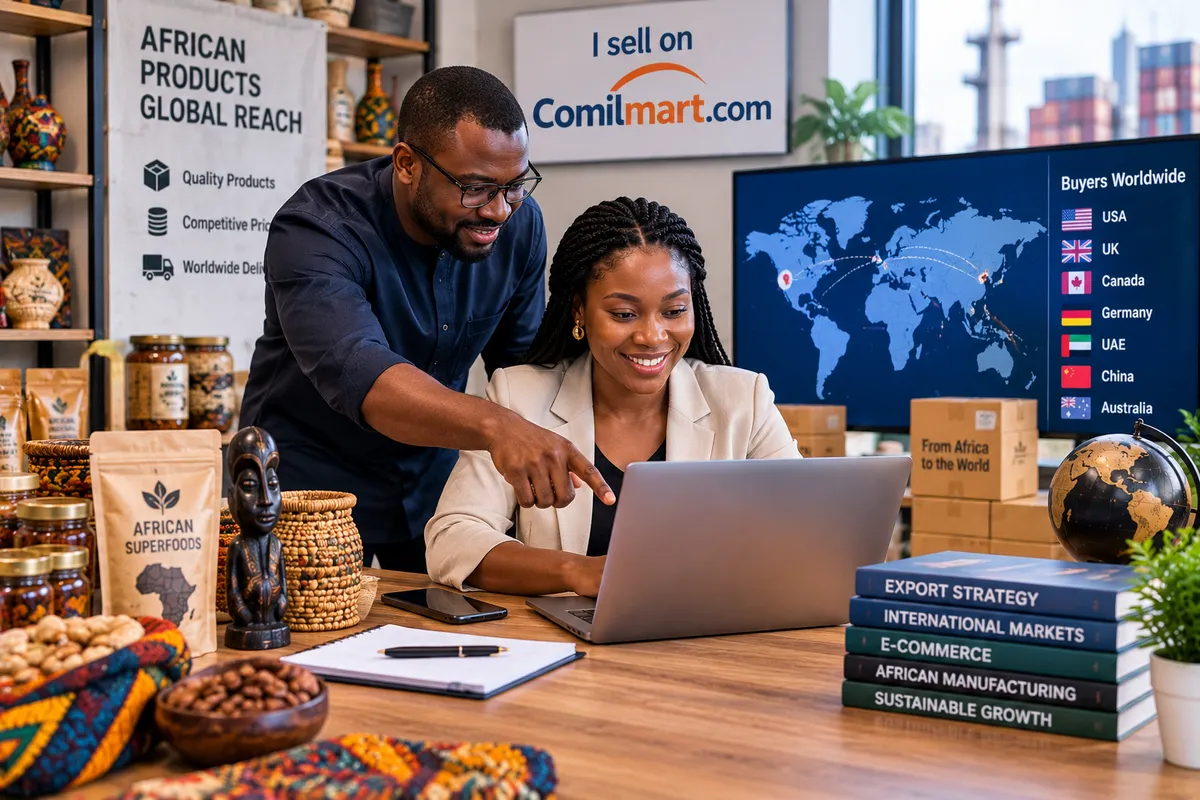
If you're deciding where to invest limited time and resources to become more attractive to international buyers, prioritize in roughly this order: getting your business registration genuinely current and properly documented; capturing clear, honest photo and video evidence of your real operation; establishing a presence on a verification-focused marketplace; and building the internal capacity to respond to inquiries within a reasonable timeframe, even if that just means checking messages daily rather than sporadically. Notably, none of this requires significant capital investment — it requires organization, honesty, and consistency, which is genuinely achievable for manufacturers of almost any size, not just large, well-resourced operations.
Frequently asked questions
Do I need a professional website to reach international buyers? It helps but isn't strictly necessary if you have a well-maintained presence on a verified marketplace — many successful manufacturers rely primarily on their marketplace profile rather than maintaining a separate website.
How long does it typically take to build a reliable base of international buyers? This varies significantly, but manufacturers who consistently apply the fundamentals above — verification, responsive communication, willingness to start with trial orders — typically see meaningful traction within several months of genuinely active effort, not overnight.
Is it worth investing in professional photography for my facility and products? It can help, but genuine, clear smartphone photography of your actual operation, taken thoughtfully, often builds more trust than obviously professional but potentially misleading polished imagery — authenticity matters more than production value in this specific context.
The economics of investing in export readiness
For manufacturers weighing whether it's worth the effort to become genuinely export-ready, it's worth being concrete about the payoff: international buyers, particularly wholesale buyers, often place significantly larger and more consistent orders than domestic retail customers, and a single strong international buyer relationship can represent meaningful, stable revenue that domestic sales alone might not provide. The upfront investment — time spent on registration, documentation, and building a verified marketplace presence — is genuinely modest compared to the revenue potential of even one or two serious ongoing international buyer relationships, which is why this is worth prioritizing even for smaller manufacturers without significant spare capital to invest.
Language and cultural considerations for international buyers
Manufacturers in non-English-speaking African markets sometimes worry that language is a barrier to reaching international buyers, particularly buyers in English-speaking markets like the US and UK. While clear communication genuinely matters, buyers who are serious about African sourcing are often more accommodating of language differences than manufacturers expect, particularly when other trust signals — verification, clear documentation, responsive communication even if not perfectly fluent — are strong. Simple, clear English communication, even if not native-level fluent, combined with patience on both sides, is generally sufficient; investing in a translator or bilingual staff member for buyer communication is worth considering as your international business grows, but shouldn't be treated as a prerequisite to starting.
Handling your first international buyer inquiry
When a genuine international inquiry arrives, resist the urge to either oversell or underdeliver information in your first response. A strong first reply specifically addresses what was asked — pricing, MOQ, lead time — without requiring the buyer to ask multiple follow-up questions just to get basic numbers, while also proactively offering the trust-building evidence covered throughout this guide (registration details, willingness to provide samples, an offer of a smaller trial order) even before the buyer thinks to ask for it. Manufacturers who anticipate what a cautious first-time buyer needs to feel confident, rather than waiting to be asked, consistently convert more inquiries into actual orders.
Measuring what's actually working
As you build an online presence aimed at international buyers, it's worth tracking, even informally, which channels and efforts are actually converting into real inquiries and orders — a verified marketplace listing, a specific product category, a particular piece of content or documentation you've shared. This lets you focus continued effort on what's genuinely working rather than spreading limited time evenly across every possible channel regardless of results. For most manufacturers starting out, a simple log of where each serious inquiry came from is enough to start seeing this pattern within the first few months of active effort.
Getting started
If you're a manufacturer ready to start reaching international buyers, register as a supplier on Comilmart and go through the verification process — see our companion guide on going from local to global as a manufacturer for the broader export readiness picture beyond just online presence.