
Sourcing & Trade Guide
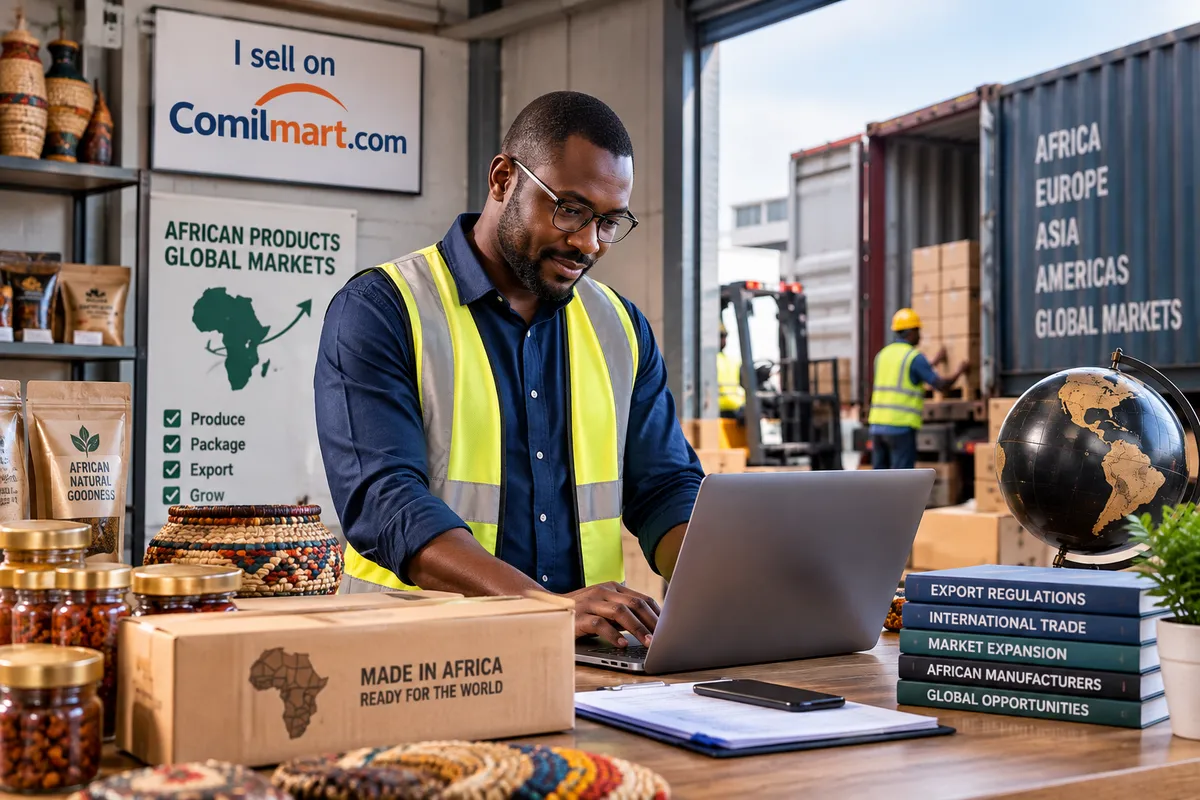
From Local to Global: A Manufacturer's Guide to Exporting from Africa
Comilmart Team
September 9, 2026
For many African manufacturers, the leap from a stable domestic business to genuine international export can feel both hugely promising and genuinely intimidating. The promising part is real — international buyers often place larger, more consistent orders than domestic customers, and access to global markets can transform a business's growth trajectory entirely. The intimidating part is also real: exporting involves genuine operational, legal, and logistical requirements that a purely domestic business doesn't need to think about. This guide walks through what actually needs to be in place.
Step 1: Get your business fundamentals genuinely export-ready
Before anything else, your business registration and documentation need to be current and properly maintained — this is the foundation every subsequent step builds on. Depending on your country, this means active, verifiable registration through bodies like Nigeria's NEPC, Ghana's GEPA, Kenya's KEPROBA, or South Africa's CIPC. Many countries also require specific export registration or licensing beyond basic business registration — confirm this requirement for your country and product category before assuming your existing domestic registration is sufficient.
Step 2: Understand your product's specific export requirements
Different product categories carry meaningfully different compliance burdens. Food products typically require food safety certification and often specific documentation for the destination market. Textiles may need to meet flammability or chemical safety standards depending on the market. Cosmetics face ingredient labeling and safety substantiation requirements that vary by destination. Research the specific requirements for your product category and your target market before investing heavily in export preparation, since these requirements directly shape what documentation, testing, and sometimes reformulation you'll need.
Step 3: Get your pricing and quoting structure genuinely ready
International buyers expect clear, professional quoting — pricing structured around MOQ tiers, transparent about what's included (see our guide to Incoterms for how to think about this), and responsive without requiring extensive back-and-forth just to get basic numbers. If you haven't already, build a standard quote template covering pricing at a few different order volumes, your standard MOQ, typical lead time, and your preferred Incoterm, so you can respond quickly and professionally to a new inquiry rather than building each quote from scratch.
Step 4: Build genuine online discoverability
As covered in more depth in our companion guide on reaching international buyers online, being genuinely findable and verifiable matters as much as having a good product. This means a presence on a platform that does real verification work, clear and consistent business information, and honest photo and video evidence of your actual operation. Registering as a supplier on Comilmart gives you this foundation through the platform's own verification process.
Step 5: Understand logistics and freight before you need them
Before your first export order, understand at least the basics of how goods actually move from your facility to an international buyer — what port or airport you'd realistically ship from, roughly what freight costs to major destination markets, and whether you have or need a relationship with a freight forwarder to help manage this. You don't need to become a logistics expert, but having enough working knowledge to discuss Incoterms and shipping options intelligently with a buyer builds significant confidence on their side.
Step 6: Prepare for your first order to be smaller than you'd like
Nearly every successful export relationship starts with a modest trial order rather than the volume a manufacturer might hope for immediately — this is standard, sensible buyer behavior, not a lack of seriousness. Treat your first order with any new international buyer as an opportunity to demonstrate quality and reliability, even if the economics of that specific order aren't especially attractive, since it's the foundation for a much larger ongoing relationship if it goes well.
Common obstacles and how to think about them
"I don't have the capital to invest in export preparation"
Most of the fundamentals covered here — registration, documentation, honest photo evidence, a verified marketplace presence — require time and organization more than significant capital. Prioritize the fundamentals before considering larger investments like new equipment or facility upgrades specifically for export, which can come later once you have real international demand to justify them.
"I'm worried about language barriers with international buyers"
Clear, simple English communication, even if not native-level fluent, combined with the other trust signals covered throughout this guide, is generally sufficient for most buyers genuinely interested in African sourcing. This becomes less of a barrier than manufacturers often expect once other trust fundamentals are solidly in place.
"I don't know how to price for export vs. my domestic market"
Export pricing should account for the additional documentation, packaging, and logistics coordination export orders require, which domestic sales typically don't — but shouldn't be so dramatically different from domestic pricing that it looks arbitrary to a buyer comparing your quote against others in the same category. Research typical pricing in your category on platforms where competing suppliers are visible, and build your own quote from your actual costs plus a reasonable margin, rather than guessing at what buyers might be willing to pay.
Choosing your first target export markets strategically
Rather than trying to reach every possible international market simultaneously, most successful new exporters find more traction focusing initial efforts on one or two target markets where genuine demand and reasonable logistics align. Consider factors like existing trade agreements that favor your country (AGOA for US market access on many products, or preferential EU access under various agreements), diaspora communities in a given market who may already have cultural familiarity with and demand for your product category, and realistic shipping logistics and cost to that specific destination. Building genuine depth and a track record in one or two markets first, then expanding once that foundation is solid, tends to produce better results than spreading limited early-stage effort thin across many markets at once.
Building relationships with freight forwarders and customs brokers
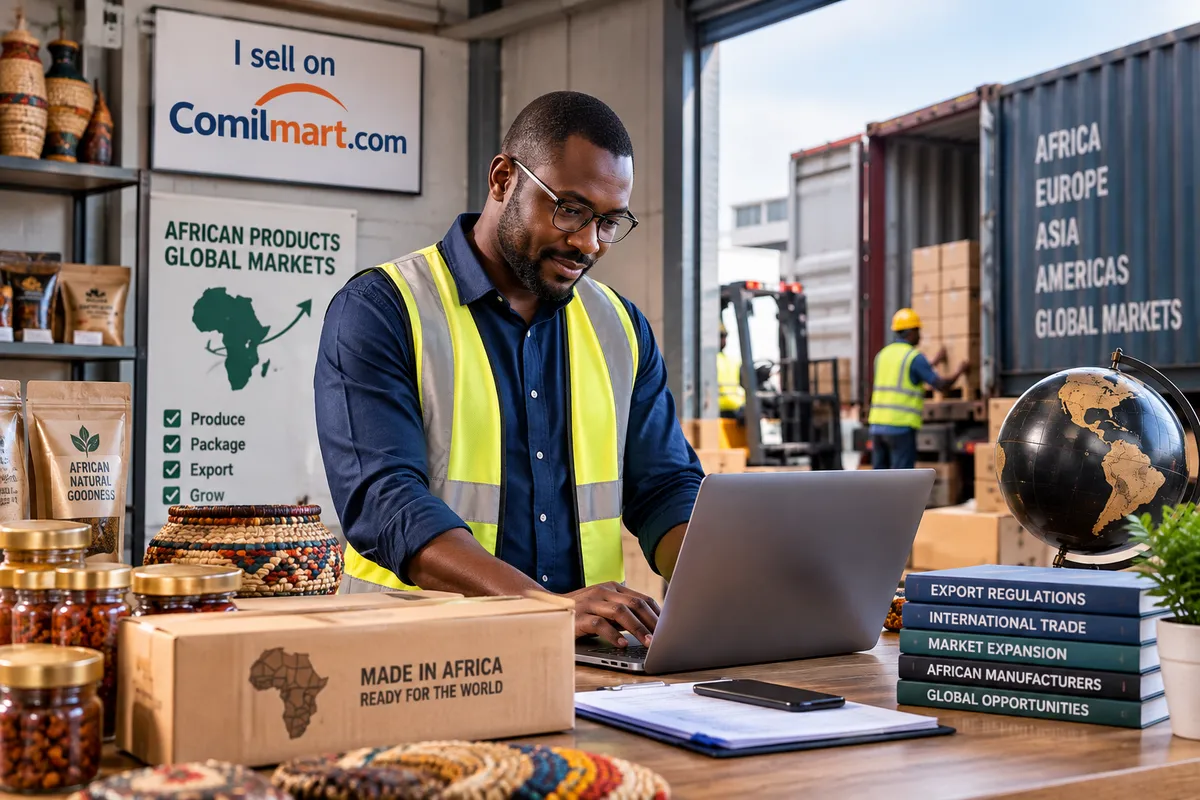
As your export volume grows, a genuine working relationship with a freight forwarder and, where needed, a customs broker becomes increasingly valuable — these professionals handle much of the logistics complexity covered throughout this series and can meaningfully reduce the operational burden on your own team. When selecting a freight forwarder, look for one with specific experience shipping your product category and, ideally, prior experience with your target destination markets, since this experience translates into fewer surprises and smoother customs clearance than working with someone unfamiliar with your specific situation.
What to expect in your first year of exporting
Manufacturers new to export commonly find the first year involves more learning and adjustment than they initially expected — refining quote templates based on real buyer questions, adjusting packaging after feedback from a first shipment, and building genuine comfort with the documentation and logistics process through repetition rather than theory alone. This is entirely normal and shouldn't be discouraging; treating the first several export orders as a genuine learning period, rather than expecting immediate smooth-running perfection, sets realistic expectations that make the inevitable early hiccups feel like normal progress rather than failure.
Learning from other African manufacturers who've successfully exported
While every business's path looks somewhat different, manufacturers who've successfully built export businesses tend to share a few common patterns worth learning from: they typically started with a genuinely narrow focus (one or two products, one or two target markets) rather than trying to export everything to everywhere at once; they invested early in the trust-building fundamentals covered throughout this series rather than treating them as optional extras; and they treated early export orders, even small or modestly profitable ones, as relationship investments rather than judging them purely on that single transaction's economics. This pattern — narrow focus, genuine trust-building, patience with early relationship-building — shows up consistently enough across successful export stories that it's worth treating as a reliable template rather than reinventing your own approach from scratch.
Comilmart as a starting point for your export journey
Many of the fundamentals covered throughout this guide — business verification, professional presentation, clear pricing, and a platform where international buyers already come looking for African suppliers — come together on Comilmart. Rather than trying to build every piece of export infrastructure from scratch simultaneously, registering as a supplier and going through the platform's verification process gives you a genuine head start on the discoverability and trust-building work that would otherwise take considerably longer to establish independently, particularly for a manufacturer new to export and without an existing international reputation to draw on.
Frequently asked questions
How long does it typically take to go from "considering export" to a first real order? This varies considerably, but manufacturers who consistently work through the fundamentals covered here — registration, documentation, marketplace verification — often see genuine inquiries within a few months of active effort, with a first completed order following from there.
Do I need a separate export-focused business, or can my existing domestic business handle both? Most manufacturers successfully handle both domestic and export sales from the same business, simply adding export-specific registration, documentation, and processes as needed rather than starting an entirely separate operation.
What's the single most common reason a promising export relationship falls apart? Inconsistency — in communication responsiveness, in product quality between what was sampled and what's ultimately shipped in bulk, or in meeting promised timelines. Buyers are generally patient with realistic limitations honestly communicated upfront, but lose confidence quickly when promises aren't kept.
Getting started
If you're ready to take the step from local to global, register as a supplier on Comilmart and begin the verification process. See our companion guide on reaching international buyers online for more on building the discoverability and trust that converts inquiries into real orders.