
Sourcing & Trade Guide
Mobile Money and Digital Payments in African Cross-Border Trade
Comilmart Team
August 22, 2026
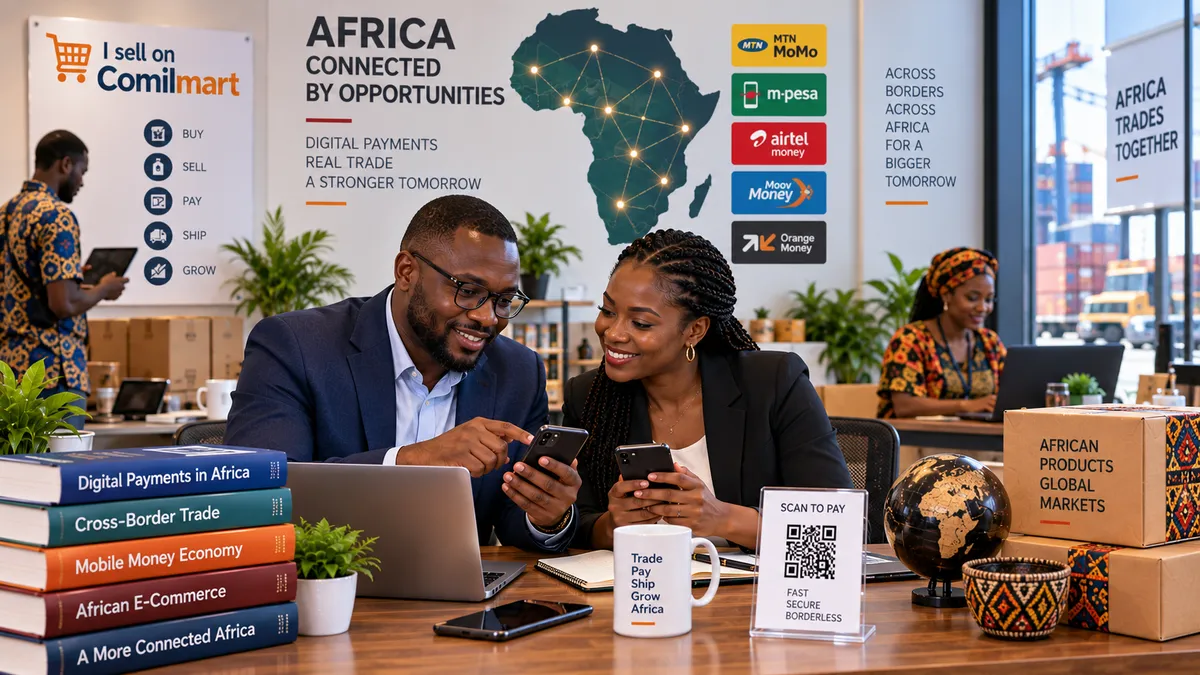
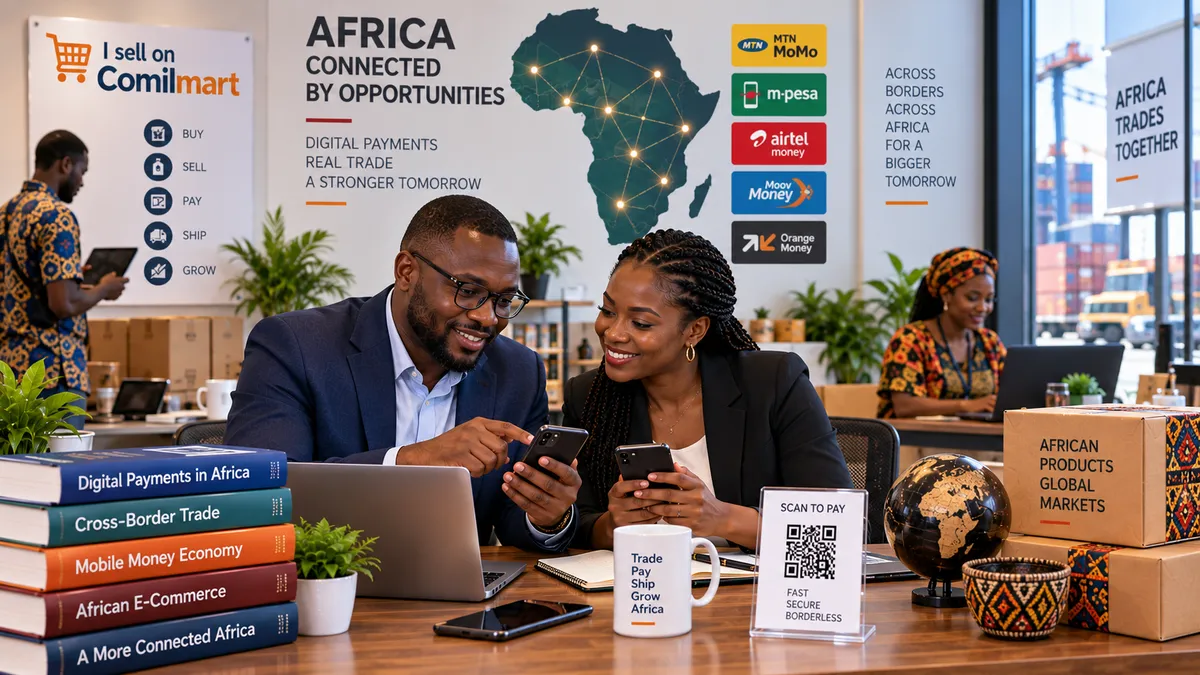
Mobile money has become one of the defining features of African commerce over the past decade, with hundreds of millions of active accounts across the continent handling everything from everyday purchases to significant business transactions. For buyers and sellers engaged in cross-border African trade, understanding how mobile money fits alongside traditional banking and card payments is genuinely useful — both as a payment option and as context for how commerce actually flows in many African markets.
Why mobile money became so significant in Africa specifically
Industry-wide data from the GSMA's Mobile Money program tracks this growth in real detail across the continent.
Mobile money's rapid growth across Africa reflects a genuine leapfrogging pattern: in many markets, mobile phone adoption significantly outpaced traditional bank account access, meaning a large share of the population gained their first real access to digital financial services through a mobile money account rather than a bank account. This isn't a niche or informal alternative to "real" banking — in many African markets, mobile money is the primary financial infrastructure a large share of the population actually uses day to day.
For businesses, this means mobile money isn't just a convenience feature — in many markets, it's genuinely central to how commerce happens, particularly for individual consumers and smaller businesses that may not have easy access to traditional card payment infrastructure.
How mobile money differs from traditional banking rails
Mobile money operates through mobile network operators (or increasingly, dedicated fintech providers) rather than traditional banks, using a phone number as the account identifier rather than a bank account number. Transactions typically happen through a simple menu on a basic phone (via USSD codes) or a smartphone app, without requiring the recipient to have a traditional bank account at all. This is a meaningfully different infrastructure than card networks or bank transfers, with its own settlement mechanisms, though many mobile money providers now offer integration paths to move funds between mobile money and traditional bank accounts.
Mobile money in B2C cross-border trade
For retail buyers in many African markets, mobile money is often the most natural and accessible payment method — more so than a credit card, which a meaningful share of the population simply doesn't have. A retail-facing platform serving African consumers that doesn't offer some form of mobile money integration is genuinely leaving out a large share of its potential buyer base, particularly outside major urban centers where card penetration tends to be lower.
For cross-border B2C transactions specifically — a buyer in one African country purchasing from a seller in another, or an international buyer purchasing from an African seller — the payment infrastructure gets more complex, since mobile money systems have historically been more developed for domestic transactions within a single country than for cross-border movement. This is an area that continues to develop, with various interoperability initiatives working to make cross-border mobile money transactions smoother, though it remains genuinely more complex than a domestic mobile money transaction within a single country's system.
Mobile money in B2B trade
For business-to-business transactions, particularly larger wholesale orders, mobile money is less commonly the primary payment method compared to bank transfers, letters of credit, or trade finance arrangements — the transaction sizes involved in significant wholesale orders often exceed practical mobile money transaction limits, and B2B buyers are more likely to have established banking relationships suited to larger transfers.
That said, mobile money remains genuinely relevant in B2B contexts for smaller-scale wholesale transactions, for paying local logistics and clearing agents as part of a larger transaction, and increasingly as a component of blended payment solutions that combine mobile money with other rails for different parts of a transaction (a deposit via mobile money, balance via bank transfer, for instance).
What this means for platform payment strategy
A marketplace genuinely serving African buyers and sellers benefits from thinking about payment infrastructure as a layered system rather than a single solution — card payments and bank transfers for larger transactions and buyers with access to that infrastructure, mobile money integration for smaller transactions and buyers where mobile money is the more natural or only accessible option, and clear communication about which payment methods are available for which transaction types.
This is also a genuine consideration in evaluating sourcing or selling opportunities across different African markets — mobile money penetration and the specific dominant providers vary significantly by country, meaning a payment strategy that works well in one African market may need real adaptation for another.
Security and trust considerations
Mobile money transactions carry their own security considerations distinct from card payments — the phone number itself becomes a meaningful point of security (SIM swap fraud is a genuine, documented risk in mobile money ecosystems), and the informal, accessible nature that makes mobile money so widely adopted can also make it a target for scams, particularly for buyers and sellers less familiar with verifying transaction authenticity.
This is exactly why routing payment through a marketplace's own protected payment system — rather than direct mobile money transfers between buyer and seller outside the platform — matters as much or more in mobile-money-heavy markets as it does anywhere else. The same buyer protection principles that apply to card or bank transfer payments apply equally here: payment held by the platform until delivery is confirmed offers genuine protection that a direct mobile money transfer to an unfamiliar seller simply doesn't provide.
Whichever payment method you use, Comilmart's buyer protection holds your payment until delivery is confirmed — the same protection applies regardless of whether you paid by card, bank transfer, or mobile money.
The growing role of digital wallets and fintech beyond mobile money
Alongside traditional mobile money, a growing ecosystem of African fintech companies has built additional digital payment infrastructure — digital wallets, virtual cards, and payment aggregation services that bridge mobile money, bank accounts, and international payment rails. This broader fintech ecosystem is gradually reducing some of the historical friction in cross-border African payments, and is worth staying aware of as an evolving part of the payment landscape rather than assuming mobile money alone represents the full picture of African digital payments.
Frequently asked questions
Is mobile money as secure as a traditional bank transfer or card payment?
Mobile money providers generally implement genuine security measures, but as with any payment method, security ultimately depends on how the transaction is structured — routing payment through a protected marketplace payment system rather than a direct, unprotected mobile money transfer to an unfamiliar party is the more meaningful security factor, regardless of which underlying payment rail is used.
Why can't I just send mobile money directly to a seller instead of using the platform's payment system?
Direct mobile money transfers, like any direct off-platform payment, forfeit the buyer protection that comes with paying through the platform — there's no held payment, no structured dispute process, and no recourse if the transaction goes wrong. This applies to mobile money exactly as it does to any other off-platform payment method.
Does mobile money penetration vary significantly across African markets?
Yes, considerably — some markets have very high mobile money adoption relative to traditional banking, while others have more developed traditional banking infrastructure alongside mobile money. Understanding the specific market you're sourcing from or selling into, rather than assuming a uniform pattern across the whole continent, gives a more accurate picture.
The bottom line
Mobile money is a genuinely significant part of how commerce happens across much of Africa, and understanding its role — where it's central to how buyers and sellers actually transact, and where it's less relevant compared to traditional banking rails — helps you navigate African trade more effectively, whether you're sourcing from the continent, selling into it, or building payment infrastructure to serve it well.