
















1. Introduction
Starting a manufacturing venture in Nigeria comes with both challenges and vast opportunities. Nylon (often used interchangeably with polythene/plastic bags in Nigerian business vernacular) is one of those sectors where demand is almost guaranteed. From retail packaging, supermarkets, boutiques, fast food joints, to pure water sachets, packaging for food and non‑food items — nylon products are everywhere.
This post examines whether producing nylon is a truly profitable business in Nigeria today, and lays out how an entrepreneur can launch and scale such a business successfully.
You may like to read: Online Store vs Physical Store: Which is Much Better in Nigeria?
2. What is “Nylon” in Nigerian Parlance / Definitions
To avoid confusion: in many Nigerian business resources, “nylon” refers to plastic polythene/polyethylene bags and related products (shopping bags, garbage bags, packaging films, etc.), rather than the chemical nylon fiber used for textiles (e.g., Nylon 6, Nylon 66).
Key materials used include:
- LDPE (Low‑Density Polyethylene)
- HDPE (High‑Density Polyethylene)
- Pigments / Colorants (e.g. Master Berg)
- Extruded plastic film, etc.
Processes include extrusion (blowing film), cutting, sealing, punching, printing.
When we talk of “nylon production” in Nigeria in this context, most refer to the manufacturing of plastic bags / polythene films rather than nylon fiber raw material (which would be more petrochemical intensive).
3. Market Demand in Nigeria
To understand if the business is lucrative, you need to assess demand. Here’s what the data and reports suggest:
3.1 Inherent High Demand
- Nylon (polythene) bags are used daily: for shopping, packaging of food and non‑food items, waste management, boutiques, laundries, pharmacies, etc. The ubiquity means demand is consistent. (The Guardian Nigeria)
- As Nigeria’s population is large and growing (200+ million), with urbanization, more retail outlets, more parcels, more packaging‑needs. (foramfera.com)
3.2 Supply Gaps / Market Opportunities
- Despite many small manufacturers and local producers, there seems to be unmet demand in many regions, especially outside major cities. (foramfera.com)
- Reports indicate that the market for polythene shopping bags has a significant revenue potential, given increasing consumption and demand. (foramfera.com)
3.3 Trend Growth
- The growth of e‑commerce, retail chains, supermarkets, fast food culture, and packaged goods increases demand for packaging materials, including nylon bags.
- Regulatory changes (plastic bans, taxation) may shift demand toward thicker, reusable, printed, or higher quality nylon bags. Entrepreneurs who anticipate regulation can exploit niches.
4. Profitability: How Lucrative is It?
Here’s where we examine whether the business can really generate meaningful profit, and what kind of profit margins / ROI one might expect, based on recent data.
4.1 What Current Reports Say
- According to The Guardian Nigeria, a small‑scale nylon production plant has estimated start‑up costs at ₦15.5 million to ₦25.5 million, with annual profits in the order of ₦29 million to ₦36 million. For medium to large scale, start‑up costs up to ₦70 million–₦220 million, with potential profits between ₦78 million–₦216 million annually. (The Guardian Nigeria)
- Some business plan sources say with small capital investment (e.g. ₦200,000 – ₦1,000,000) one can start on a modest scale, especially cutting & selling bags without full extrusion. (bornbyai.com)
4.2 Profit Margins
Margins can vary, depending on:
- cost of raw materials (LDPE / HDPE pellets / chips)
- cost of power / electricity / generator fuel
- transportation and logistics costs
- cost of labor
- overhead (rent, maintenance)
- whether printing / branding is included
Many reports indicate profit margins of 25‑50% in well‑run operations. (bornbyai.com)
4.3 Break‑Even & Payback Periods
- Small‑scale operations with localized distribution and modest capital investment may break even within 6‑12 months, assuming steady demand and decent margins.
- Larger scale setups take longer, but due to higher volumes, absolute profits are larger.
5. Key Success Factors & Risks
Even though the opportunity is strong, success is not automatic. Here are what make or break nylon production businesses in Nigeria.
You may like to read: The Future of E-commerce in Africa: Predictions, Trends & Opportunities
5.1 Critical Success Factors
- Reliable Power Supply: Machines need consistent electric power. Because the national grid is often unreliable, many businesses invest in generators or inverters. (JBINVESTING)
- Access to Raw Materials: Local supply of LDPE/HDPE pellets or chips, colorants. Importing raises cost and risk (foreign exchange fluctuations).
- Machinery Quality & Maintenance: Good extruder, cutter, printer machines. Keeping them in good repair to reduce downtime and waste.
- Skilled Labor: Machine operators, printing technicians, maintenance people, sales/distribution staff. Having experience helps. Training and oversight are important.
- Location: Close to markets, raw materials, and transport networks to reduce transportation cost. Industrial zones preferable.
5.2 Risks and Challenges
- Power costs & outages: Fuel cost, generator maintenance, downtime when power is out can reduce output or raise unit cost.
- Foreign exchange & import costs: If machines or raw materials are imported, FX volatility can send costs upward.
- Competition: Many small players who produce and distribute locally. Some imported products may be cheaper (but often quality is lower).
- Regulatory & Environmental Pressure: Plastic waste concerns are rising; regulation or bans (especially thin plastic bags) or imposition of taxes on plastics may affect business.
- Cost Inflation: Transport, labor, raw materials cost fluctuations.
6. Step‑by‑Step Guide: How to Start Nylon Production in Nigeria
This step‑by‑step guide is designed for someone starting from scratch (or scaling up), covering what to do, what to source, and how to organize.
Step 1: Market Research & Feasibility Study
- Identify your target customers: supermarkets, boutiques, food vendors, restaurants, pure water sachet companies, laundry, school supplies, pharmacies, etc. (Nigerian Finder)
- Survey existing producers: find out pricing, quality, what customers complain about, what’s missing in the market.
- Examine local consumption patterns, how many shops, markets, population in your area, purchasing power.
- Investigate regulatory environment: any local bans on thin plastics, environmental levies, taxes, import duties on raw materials or machines.
Step 2: Write a Solid Business Plan
Your business plan should include:
- Executive summary
- Market analysis
- Product lines (types of nylon bags / thickness / printing / designs)
- Operational plan: plant layout, equipment needed, workforce
- Cost estimation: capital expenditure (machines, land / rent, construction), working capital (raw materials, utilities, wages)
- Pricing strategy
- Marketing & distribution plan
- Financial projection: revenue, expenses, profit margins, cash‑flow, break‑even
Step 3: Legal Registration and Permits
- Register business with the Corporate Affairs Commission (CAC) in Nigeria. Make sure to choose an appropriate legal structure – sole proprietorship, partnership, limited liability company. (Nigerian Finder)
- Obtain Tax Identification Number (TIN), any required licenses.
- Environmental permits if applicable (depending on state laws for plastic manufacturing).
Step 4: Location & Facility Setup
- Acquire land or lease premises. Industrial areas are preferable (cheaper rate, better infrastructure).
- Ensure good road access, proximity to raw material suppliers, access to markets.
- Size of facility depends on scale; must accommodate machines, storage, staff housing/offices.
Step 5: Acquire Machinery
Depending on scale, machinery might include:
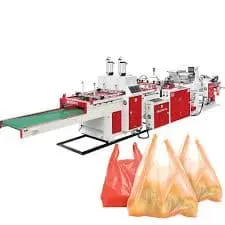
- Extruder / Blower Machine: to melt plastic pellets and blow into film sheets.
- Cutting Machine: to cut rolls into desired bag sizes.
- Punching / Sealing Machine: handles, sealing edges.
- Printing Machine (optional but adds value): for logo, branding, colored designs.
You may choose locally fabricated machines (cheaper, easier maintenance) or imported machines (higher cost, perhaps better quality). Costs vary greatly depending on capacity. (Nigerian Finder)
Step 6: Sourcing Raw Materials
- LDPE/HDPE pellets or chips
- Color pigment / dyes (e.g. Master Berg)
- Packaging materials (bundling, labeling, etc.)
- If importing, you’ll need to factor in import duties, shipping, handling, lead time
Step 7: Staffing & Operational Processes
- Skilled operators for extruders and printers
- Handlers for cutting, sealing
- Quality control personnel
- Maintenance technicians
- Admin, sales, distribution staff
Operational flow might be: raw material → extrusion / film blowing → cooling → cutting/sealing → printing (if any) → finishing → packaging → distribution
You may like to read: Which eCommerce Platform Is Best in Nigeria?
Step 8: Utilities & Power
- Electricity is key. Because public power is unreliable, many businesses need generators or alternative power sources. Consider cost of generator fuel, maintenance.
- Water supply, waste disposal, waste‑management plan.
Step 9: Branding, Packaging & Quality
- Product differentiation via printing or special features (handles, thicker or decorative bags) can justify higher prices.
- Ensure quality: avoid thin flimsy bags that tear easily; ensure uniform cutting & sealing; good prints.
- Safety and regulatory compliance for plastics, especially if used for food packaging.
Step 10: Distribution & Marketing
- Find distributors / wholesalers, shops, markets
- Direct sales to supermarkets, boutiques, food vendors.
- Participate in trade fairs, local markets.
- Online presence: social media marketing; listing products; taking orders.
- Offer promotional pricing, bulk discounts.
Step 11: Monitor & Scale
- Track cost of goods sold, margins, waste percentage, downtime.
- Reinvest profits: buy better machines, add printing, expand product lines.
- Consider exporting to neighbouring countries if local demand saturates.
7. Financial Projections & Cost‑Breakdown (Sample)
To help you think concretely, here is a hypothetical sample of costs and revenues, for a medium‑scale nylon production plant in Nigeria. Figures are illustrative; actual numbers depend on location, size, exchange rates, etc.
| Item | Estimated Cost / Expense (NGN) | Notes |
|---|---|---|
| Capital Expenditure (CAPEX) | ||
| Land Lease or Building Setup | ₦10,000,000 | |
| Factory / Plant Construction / Renovation | ₦5,000,000 | |
| Extruder / Film Blowing Machine | ₦15,000,000 | |
| Cutting, Sealing, Punching Machines | ₦5,000,000 | |
| Printing Machine | ₦4,000,000 | |
| Generators / Power Backup | ₦3,000,000 | |
| Other Equipment & Furniture | ₦1,000,000 | |
| Working Capital (first 3‑6 months) | ||
| Raw Materials (LDPE/HDPE, pigments) | ₦8,000,000 | |
| Utilities (Fuel, Electricity, Water) | ₦2,000,000 | |
| Labor / Salaries | ₦3,000,000 | |
| Transport & Logistics | ₦1,500,000 | |
| Marketing, Packaging, Miscellaneous | ₦1,500,000 | |
| Total Estimated Startup Cost | ₦60,000,000 – ₦70,000,000 | Medium‑scale; lower for smaller units. |
Potential Revenue & Profit (Year 1, Medium Scale)
- Assume you produce and sell a variety of bags / films / printed bags.
- Gross revenue might reach ₦90,000,000 in first year (assuming good capacity utilization, stable supply).
- Cost of goods sold + expenses might take ~60‑70% of revenue → yields profit margin ~30‑40%, meaning net profit of ~₦25,000,000 – ₦35,000,000.
These are broad estimates; your actual numbers will depend largely on raw material costs, power / fuel costs, labor, and overhead.
You may like to read: The Best Real Estate Company in Nigeria: Top Firms, Platforms, and What Sets Them Apart
8. Marketing & Distribution Strategies
Even with good production, weak marketing can sink the business. Here are strategies to succeed.
8.1 Target Market Segmentation
Split your potential market into:
- Retail (shops, markets, boutiques)
- Corporate clients (supermarkets, fast foods, malls)
- Industrial users (factories, production lines)
- Food packaging companies (pure water, food sachets, snacks)
- Custom / promotional clients (printing logos, events etc.)
8.2 Pricing Strategy
- Cost‑plus pricing: ensure all costs + desired margin are covered.
- Volume discounts for bulk buyers.
- Premium pricing for printed / branded or thicker bags.
8.3 Branding & Unique Selling Proposition (USP)
- Quality consistency
- Reliable supply (especially in times when competitors might be backlogged)
- Ability to customize printing
- Environmental angle: maybe reusable or recyclable bags, or involvement in recycling
8.4 Distribution Channels
- Direct sales via sales team
- Wholesale distribution to retail outlets
- Partnerships with packaging shops, markets
- Online sales / order taking
- Possibly export to neighboring countries
8.5 Promotion & Advertising
- Local advertising – billboards, radio, flyers in markets / shops
- Social media marketing – show product quality, uses, clients
- Offering promos / trials to large stores or market traders
9. Sustainability, Regulations & Environmental Considerations
As global attention on plastic pollution increases, being mindful of regulation and environmental impact is vital.
- Plastic / Polythene Regulation: Some states or local governments may ban or restrict thin, single‑use plastic bags. Ensure compliance.
- Waste Management: Plan for disposal / recycling of waste film, defects, offcuts. Could even partner with local recyclers.
- Environmental Permits & Policies: Check with environmental protection agencies in your state regarding emissions, waste disposal, usage of polymers.
- Green / Sustainable Options: Using biodegradable plastics (if viable), lighter weight reusable bags, or bag recycling programs might be competitive advantages.
10. Conclusion
Yes — producing nylon (plastic bags / polythene films) in Nigeria can be a very lucrative business, especially if well managed. The existing, persistent demand, large population, rising consumerism, and increasing need for packaging make it a market with staying power.
However, success depends heavily on good planning, securing reliable power, sourcing quality raw materials, managing costs, understanding regulation and environmental issues, and executing strong marketing. Starting small, learning the trade, and then scaling is a solid path.
References
- The Guardian Nigeria – Business Section (for articles on setting up nylon / polythene production) — e.g. “Setting up nylon production plant” article from Guardian. (The Guardian Nigeria)
- NigerianFinder.com — for step‑by‑step guides on nylon production. (Nigerian Finder)
- BusinessPlan.com.ng — for business plan examples in Nigeria. (Business Plan)
- WealthResult.com — manufacturing business idea resources. (wealthresult.com)
- Foraminifera Market Research (on market gaps and extruding opportunities) (foramfera.com)
- Environmental Protection Agency Nigeria or state environment ministry sites (if you can find specific regulations)